RenderForesight暂定名

改一处代码, 画面会变成哪一张?

RenderForesight 考的是: 不运行程序, 模型能不能预测一次代码修改或一串界面操作之后, 程序渲染出来的画面。每道题的标准答案都来自真实渲染, 判分不需要另一个模型来打分。下面是其中一道真题, 可以自己选一下。

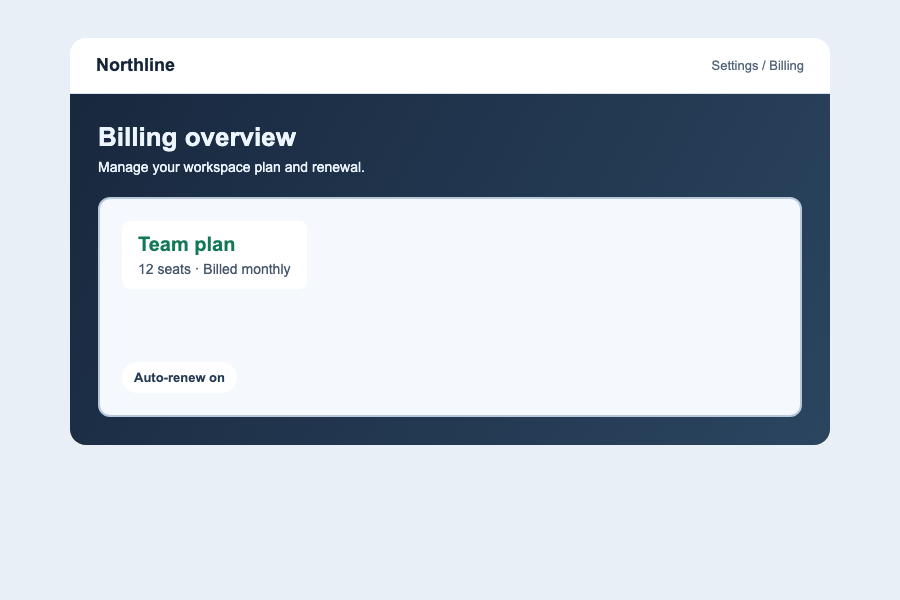
修改前的画面

修改前的渲染结果

施加的修改


基础程序的源码

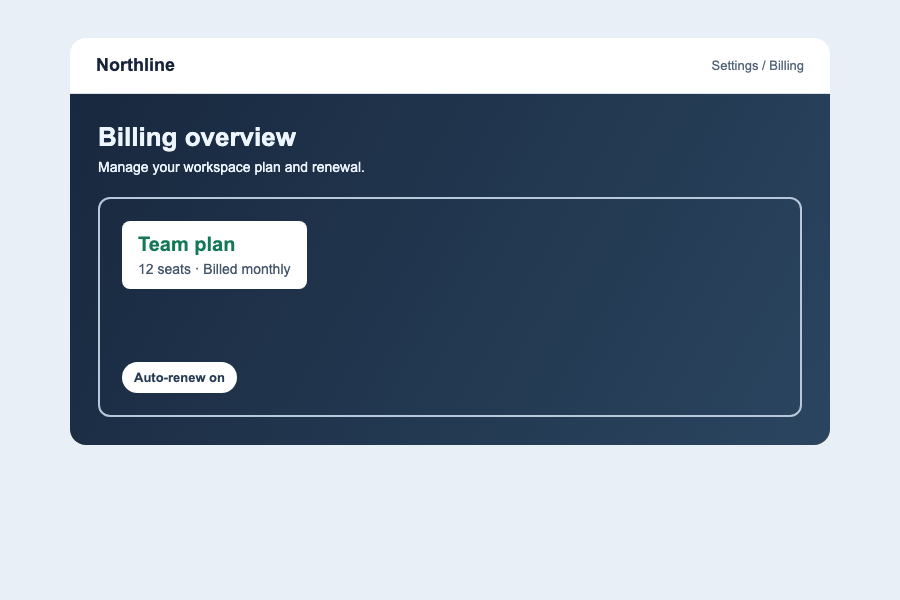
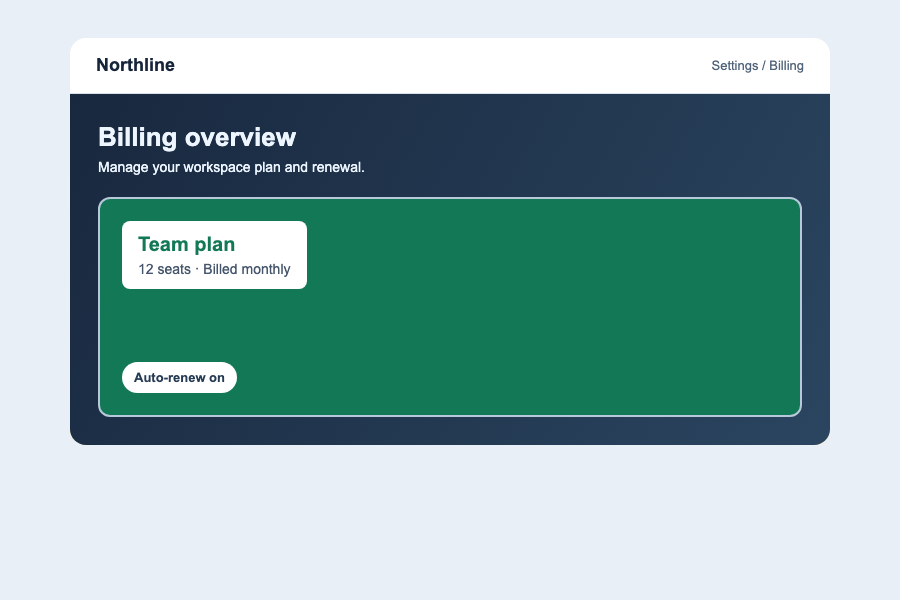
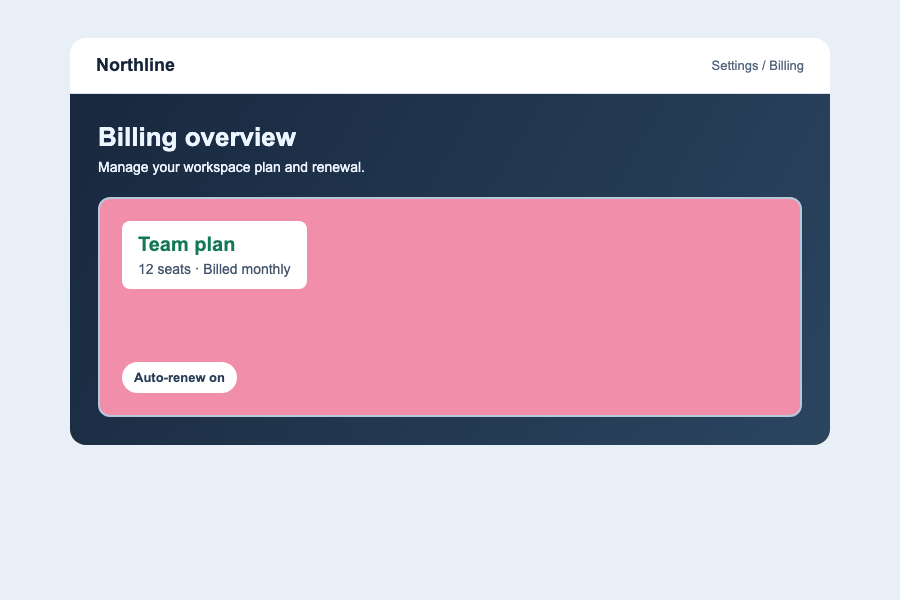
哪一张是修改后的画面? 点一张看答案和各模型的选择

这是一份 pilot: 题目和结果都是真实跑出来的, 规模还小。更新于 2026-11-26 08:34 UTC。已测有实测数据 进行中实验在跑 预测尚未运行的预期

它测什么

每组题有一个基础程序和几个作用在同一处的修改, 每个修改都真实渲染一次, 渲染结果互为干扰项。题目覆盖 HTML/CSS 样式、带状态的交互页面、SVG 与 canvas、matplotlib 图表四类程序。

正向预测

修改前
→
候选候选候选候选

给源码、修改前的画面和一个修改, 从四张候选里选出修改后的画面。四张候选是四个相近修改的真实渲染结果。

63 组, 252 题

反向归因

修改前
修改后
→
+ inherit+ initial+ currentColor+ #f18eaa

给源码和修改前后两张画面, 从四个候选修改里选出造成这个变化的那一个。这道题里四个修改只差 background-color 的取值。

63 组, 252 题

连续多步操作

初始画面
8 步操作→
最终画面

在交互页面上随机走 1 到 32 步, 预测最后的画面。干扰项来自只差一步的操作序列, 步数就是难度旋钮。

152 组, 608 题

开放式作答

划了网格的修改前画面, 高亮的是修改后会变的格子
修改后的真实画面

不给候选。把修改前的画面划成 6×4 的网格, 让模型列出修改后哪些格子会变 (左图高亮的部分), 再和真实渲染前后的像素差比较。

252 题, 全部格子判对才算对

为什么值得测

多模态的 coding agent 改的是「看得见」的代码。它在动手之前对画面的预期准不准, 现有 benchmark 没有单独量过。

44.5%

agent 经常不去看图。在设计稿还原任务 VISTA 里, 44.5% 的轨迹没有任何查看截图的记录, 73.0% 没有做规定的逐页自查。不看的时候, 靠的就是模型心里对画面的预期。

41.1 → 52.0%

让 agent 看到真实画面多数时候有帮助。GameDevBench 里加上截图和视频反馈, GPT-5.4 的通过率从 41.1% 到 52.0%; 也有模型几乎不变或略降 (Gemini 3 Flash 从 45.4% 到 44.1%)。

0 个同类

在核对过的 61 个多模态 coding benchmark 和 38 篇 GUI world model 工作里, 没有找到给出源码和一次修改、让模型预测渲染结果的评测 (见现有工作里的位置)。

现有证据并不一边倒: VISTA 里给 agent 加上截图输入, 得分没有可测的变化; CUA-SWE 里能操作界面带来的 48.6 个百分点提升, 主要来自需求只写在界面里的任务, 需求写在源码里的任务几乎不变。「对画面的预期准不准」对任务成功率到底有多大影响, 目前没有直接的数据, 单独把它量出来是第一步。

它还有一个现有评测少有的性质: 每一次预测都可以用一次真实渲染来核对, 不依赖 VLM 打分。这也意味着同样的数据可以当作训练信号, 给 agent 的每一步提供监督。

新发现

已测以下结果来自 10 个模型在 63 组真题上的实测, 以及多步操作和开放式作答两组加难实验。

这项能力是最近一年才成熟的。

发布于 2024 年底的 Amazon Nova Lite、Amazon Nova Pro、Pixtral Large 的正向预测正确率在 34.5% 到 36.5% 之间, 只比随机水平高十个点左右。2025 年 11 月的 Claude Opus 4.5 是 77.4%, 2026 年 3 月的 GPT-5.4 是 81.0%。2026 年 9 月以后发布的 7 个模型都在 95.6% 以上。这些数字是在推理不超过 150 词的条件下测的; 取消这个上限后, Claude Sonnet 4.6 是 83.7%、Claude Haiku 4.5 是 64.7%, 差距缩小但仍然存在。

AnthropicOpenAIAmazon 与 Mistral
25 50 75 100 随机水平 2024-12 2025-06 2025-12 2026-06 2026-11 模型发布月份 Pixtral Large 35 Nova Lite 35 Nova Pro 37 Haiku 4.5 59 Opus 4.5 77 Nova 2 Lite 39 Sonnet 4.6 76 4.6 83 GPT-5.4 81 4.7 89 GPT-5.5 98 4.8 83 Sonnet 5 87 Opus 5 87 右上角的 8 个点 (2026 年 7 月以后, 95 以上): GPT-5.6-sol 98.8 Claude Opus 5.5 100.0 Claude Sonnet 5.5 99.2 GPT-6-sol 98.4 GPT-6.1-sol 100.0 Claude Haiku 5.5 95.6 Claude Fable 5.2 100.0 GPT-6.2-sol 100.0
正向预测正确率 (%) 与模型发布月份, 每个点是一个模型在全部 252 道题上的成绩, 同一家族用线连起来。每个点只跑了一次, 80% 附近的点 95% 区间约为正负 5 个百分点, 相邻版本之间的小幅起伏不宜解读。发布月份逐个取自厂商的发布说明。
各模型的发布月份与三项成绩
模型发布月份正向预测反向归因感知对照
Pixtral Large2024-1134.9未完成未完成
Amazon Nova Lite2024-1234.528.694.0
Amazon Nova Pro2024-1236.529.496.8
Claude Haiku 4.52025-1059.153.6100.0
Claude Opus 4.52025-1177.472.6100.0
Amazon Nova 2 Lite2025-1238.935.390.1
Claude Sonnet 4.62026-0275.872.2100.0
Claude Opus 4.62026-0282.980.2100.0
GPT-5.42026-0381.076.698.8
Claude Opus 4.72026-0488.986.5100.0
GPT-5.52026-0498.499.2100.0
Claude Opus 4.82026-0583.381.7100.0
Claude Sonnet 52026-0686.5未完成未完成
Claude Opus 52026-0786.997.2100.0
GPT-5.6-sol2026-0798.898.8100.0
GPT-6-sol2026-0998.499.6100.0
Claude Sonnet 5.52026-0999.299.6100.0
Claude Opus 5.52026-09100.0100.0100.0
GPT-6.1-sol2026-09100.0100.0100.0
Claude Haiku 5.52026-1095.697.2100.0
Claude Fable 5.22026-11100.0100.0100.0
GPT-6.2-sol2026-11100.0100.0100.0

较弱的模型看得清候选图, 却预测不对。

只让模型从四张候选里找出和参考图相同的那一张, Claude Sonnet 4.6、Claude Haiku 4.5、Amazon Nova Pro 的正确率在 96.8% 到 100.0% 之间。换成预测修改后的画面, 它们只有 36.5% 到 75.8%。失分来自预测, 候选图本身它们分得清。

感知对照: 找出相同的一张正向预测
0 50 100 随机水平 25 Claude Sonnet 4.6 100.0 75.8 Claude Haiku 4.5 100.0 59.1 Amazon Nova Pro 96.8 36.5

渲染语义比状态跟踪难得多。

Claude Sonnet 4.6 在交互页面 (跟踪状态) 上的正确率是 98%, 在 CSS 样式、SVG、图表上是 68%、67%、73%; Claude Haiku 4.5 也是交互页面最高 (79%), 其余三类在 50% 到 56% 之间。把界面操作从 1 步加到 32 步, 测过的 7 个模型在已答完的各档里正确率最低也有 96.9%。

Claude Sonnet 4.6 的正向预测正确率, 按程序类别
0 50 100 随机水平 25 交互页面 98.2 matplotlib 图表 73.4 HTML/CSS 样式 67.9 SVG / canvas 66.7

不给候选时, 最强的模型预测得几乎和看到的一样准。

这里全部格子都判对才算对, 所以先要看「看」能做到多好: 把修改前后两张画面都给模型、让它直接找不同, 这是这种作答方式的上限。GPT-6.2-sol 看图是 81.8%, 不给修改后的画面去预测是 78.2% (252 道题里看图能答对而预测答错的有 12 道)。其余模型的对照还在跑, 目前只有预测的成绩: Claude Fable 5.2 81.8%、Claude Sonnet 5.5 70.2%、Claude Opus 5.5 67.5%、Claude Sonnet 4.6 24.2%、Claude Haiku 4.5 11.1%。

预测: 只看修改前的画面对照: 两张画面都给, 直接找不同
0 50 100 Claude Fable 5.2 81.8 GPT-6.2-sol 78.2 81.8 GPT-5.5 71.2 已答 236 Claude Sonnet 5.5 70.2 Claude Opus 5.5 67.5 Claude Haiku 5.5 54.4 已答 228 Claude Sonnet 4.6 24.2 Claude Haiku 4.5 11.1

预测主要靠源码, 修改前的截图几乎不起作用。

在消融全部跑完的 9 个模型上, 去掉修改前的截图, 正确率的变化都不超过 1.6 个百分点; 去掉源码、只留截图和修改, 正确率下降 5.6 到 17.8 个百分点。

完整输入去掉修改前截图去掉源码
0 50 100 随机水平 25 Claude Fable 5.2 100.0 100.0 92.1 Claude Opus 5.5 100.0 100.0 90.1 GPT-6.2-sol 100.0 100.0 90.5 Claude Sonnet 5.5 99.2 99.2 90.9 GPT-5.5 98.4 99.2 88.1 Claude Haiku 5.5 95.6 95.6 77.8 Claude Sonnet 4.6 75.8 77.4 65.1 Claude Haiku 4.5 59.1 60.7 47.6 Amazon Nova Pro 36.5 36.9 30.9

多图题的标号要印在图上。

第一版提示里候选图只用文字标号。GPT-5.5 把「修改前」那张截图数成了第 1 个候选: 已答的 209 题里错了 85 题, 其中 84 题都错成「正确选项的下一个」。把名称直接印在图片顶部之后, 同一个模型的正确率是 98.4% (248/252)。这一页的结果全部来自印了名称的版本。

文字标号名称印在图上
0 50 100 文字标号 59.3 已答 209 题 名称印在图上 98.4

现在的局限

全部结果

四选一

正向预测反向归因感知对照
0 25 50 75 100 随机水平 25 Claude Fable 5.2 100.0 100.0 100.0 Claude Opus 5.5 100.0 100.0 100.0 GPT-6.2-sol 100.0 100.0 100.0 Claude Sonnet 5.5 99.2 99.6 100.0 GPT-5.5 98.4 99.2 100.0 Claude Haiku 5.5 95.6 97.2 100.0 Claude Sonnet 4.6 75.8 72.2 100.0 Claude Haiku 4.5 59.1 53.6 100.0 Amazon Nova Pro 36.5 29.4 96.8 Pixtral Large 34.9 35.5 已答 93/252 尚无结果
10 个模型在 252 道题上的正确率 (%), 细线是 95% Wilson 区间, 虚线是随机水平。部分模型还没有答完全部题目, 图中标了已答题数; 跑完后数字会更新。模型先用不超过 150 词推理, 再给出选项。
全部任务的数字 (含区间)
模型正向预测反向归因感知对照正向预测 (不给修改前截图)正向预测 (不给源码)
Claude Fable 5.2100.0 [98, 100]100.0 [98, 100]100.0 [98, 100]100.0 [98, 100]92.1 [88, 95]
Claude Opus 5.5100.0 [98, 100]100.0 [98, 100]100.0 [98, 100]100.0 [98, 100]90.1 [86, 93]
GPT-6.2-sol100.0 [98, 100]100.0 [98, 100]100.0 [98, 100]100.0 [98, 100]90.5 [86, 94]
Claude Sonnet 5.599.2 [97, 100]99.6 [98, 100]100.0 [98, 100]99.2 [97, 100]90.9 [87, 94]
GPT-5.598.4 [96, 99]99.2 [97, 100]100.0 [98, 100]99.2 [97, 100]88.1 [84, 92]
Claude Haiku 5.595.6 [92, 98]97.2 [94, 99]100.0 [98, 100]95.6 [92, 98]77.8 [72, 82]
Claude Sonnet 4.675.8 [70, 81]72.2 [66, 77]100.0 [98, 100]77.4 [72, 82]65.1 [59, 71]
Claude Haiku 4.559.1 [53, 65]53.6 [47, 60]100.0 [98, 100]60.7 [55, 67]47.6 [42, 54]
Amazon Nova Pro36.5 [31, 43]29.4 [24, 35]96.8 [94, 98]36.9 [31, 43]30.9 [26, 37]
Pixtral Large34.9 [29, 41]35.5 [27, 46] (93/252)尚无尚无尚无

方括号里是 95% Wilson 区间。后两列是消融: 去掉修改前截图, 或去掉源码。

正向预测按题目类别拆分
模型HTML/CSS 样式交互页面 (UI 操作)SVG / canvasmatplotlib 图表
Claude Fable 5.2100 (84/84)100 (56/56)100 (48/48)100 (64/64)
Claude Opus 5.5100 (84/84)100 (56/56)100 (48/48)100 (64/64)
GPT-6.2-sol100 (84/84)100 (56/56)100 (48/48)100 (64/64)
Claude Sonnet 5.5100 (84/84)100 (56/56)98 (47/48)98 (63/64)
GPT-5.598 (82/84)100 (56/56)96 (46/48)100 (64/64)
Claude Haiku 5.596 (81/84)100 (56/56)96 (46/48)91 (58/64)
Claude Sonnet 4.668 (57/84)98 (55/56)67 (32/48)73 (47/64)
Claude Haiku 4.556 (47/84)79 (44/56)50 (24/48)53 (34/64)
Amazon Nova Pro35 (29/84)38 (21/56)38 (18/48)38 (24/64)
Pixtral Large37 (31/84)41 (23/56)19 (9/48)39 (25/64)

取消字数上限后, Claude Haiku 4.5 从 59.1% 变为 64.7%、Claude Haiku 5.5 从 95.6% 变为 96.4%、Claude Sonnet 4.6 从 75.8% 变为 83.7%、Amazon Nova Pro 从 36.5% 变为 34.9%。Llama 4 Maverick 每次请求最多接受 3 张图, 且在所用的 API 上已被标为 legacy 无法访问, 所以没有它的结果。

连续多步操作

在 13 个交互页面上随机走 N 步, 每一步都从当时页面上可见的控件里选一个; 再把序列改动一步 (删掉、替换、交换相邻两步或插入一步) 得到三个干扰序列, 只保留四个序列的最终画面两两不同、且重放结果确定的题组。这一组不限制推理字数。

模型1 步2 步4 步8 步16 步32 步
GPT-6.2-sol100.0100.0100.0100.0100.0100.0
GPT-5.5100.0100.0100.0100.0100.0100.0
Claude Fable 5.2100.0100.0100.0100.0100.0100.0
Claude Opus 5.599.0100.0100.099.0100.0100.0
Claude Sonnet 5.5100.0100.0100.0100.0100.0100.0
Claude Haiku 5.5100.0100.0100.098.198.197.9
Claude Sonnet 4.6100.0100.0100.098.197.196.9

正向预测正确率 (%)。已全部答完的档是 1、2、4、8、16、32 步, 这些档里 7 个模型的正确率最低是 96.9%。

开放式作答

格内至少 1% 的像素变了算「变」, 不到 0.1% 算「不变」, 介于两者之间的格子不计分; 所有格子都判对才算这道题全对。

模型预测: 全对预测: IoU查准查全看图找不同: 全对看图找不同: IoU
Claude Fable 5.281.80.9580.9581.00086.7 (30/252)0.969
GPT-6.2-sol78.20.9540.9570.99881.80.956
GPT-5.571.2 (236/252)0.9250.9390.984未跑未跑
Claude Sonnet 5.570.20.9300.9430.98275.7 (37/252)0.913
Claude Opus 5.567.50.9200.9350.98278.9 (237/252)0.958
Claude Haiku 5.554.4 (228/252)0.8680.9060.944未跑未跑
Claude Sonnet 4.624.20.7130.8470.83419.6 (56/252)0.677
Claude Haiku 4.511.10.5350.7800.69212.3 (106/252)0.521
基线: 一律答「没有变化」7.50.0751.0000.075
基线: 一律答全部 24 格11.10.4810.4811.000

IoU 是预测格子集合与真实变化格子集合的交并比, 两者都为空时记 1。

题目是怎么来的

它在现有工作里的位置

把 world model 理解成「给定当前状态和一个动作, 预测下一个状态」, 现有的多模态评测可以按状态里有没有源码、动作是界面操作还是代码修改分成下面几格。每一格里列的都是打开过论文核实的工作。

拥挤

截图 + 界面操作 → 下一屏

Code2World、gWorld / MWMBench、AppDeltaWorld、WebDreamer、RSWT-Bench、Dual Exam。

代码只是模型输出下一屏时用的表示, 模型看不到应用的源码。评分以 VLM 判断和图像相似度为主。对 agent 的帮助有正面数字 (Code2World 让 Gemini-2.5-Flash 在 AndroidWorld 上从 41.4% 到 50.9%), 也有反面结果: 直接学一个给候选动作打分的评估器之后, 预测出来的下一屏不再带来可检测的排序信号。作者说明这个结论只针对推理时用一步预测挑选动作, 不涉及把 world model 用在训练里。

有人做, 只测感知

前后两张截图 → 说出哪里变了

DiffSpot、WUICC-bench。

数据同样来自「改一处 CSS 再渲染」, 但模型看不到代码, 也不需要预测。DiffSpot 上最好的模型 (Gemini 3.1 Pro) 总体正确率 47.2%, 说明真实网页上细粒度的视觉差异本身就不容易看出来。

有人做, 没有修改

程序文本 → 它渲染出来是什么

SGP-Bench、Uni-MMMU 的 code rendering 任务。

只给 SVG 或 CAD 程序, 问渲染结果的语义或让模型画出来。对象是独立的图形片段, 没有修改前后的状态, 也没有 HTML、图表或游戏代码。

RenderForesight 所在的一格, 未找到同类

源码 + 代码修改 → 渲染结果; 前后截图 + 源码 → 是哪次修改

检索中没有找到给出真实源码和一次修改、用真实渲染结果判分的评测, 也没有找到给出代码后把视觉变化归因到具体 diff 的评测。

最接近的几项: ChartEditBench 的一个任务给代码和前后两张图, 让模型写出修改后的代码 (合成的 matplotlib); Neural Change Prediction 预测代码修改的效果, 但只做了 Python 的文本输出; ScratchWorld 给 Scratch 程序和一个动作, 预测的是符号状态而不是画面。同样的任务形状在纯文本里已经有了: CTE-Bench 给服务端代码和一次源码修改, 让模型预测之后每次调用的返回值。

检索覆盖有限 (见来源里的说明), 这是「没找到」而不是「证明不存在」。

别处的「world model」评测在测什么

另外核对了 116 个带 world model 字样或做状态预测的评测, 并精读了 26 篇最接近的论文。

GUI 与 computer-use 的 world model (38 行)
名称日期模型要输出什么评分方式最好成绩 (出处)以动作为条件?标准答案来自真实执行?与任务成功率的关系
Computer-Use Agents Gain Little Benefit from a World Model When Conditioned on Tutorials2026-11No prediction benchmark. A judge picks among proposed actions with no rollout, with a zero-shot text description of the next state (R-WoM style), or with an oracle rollout made of the real next screenshots, horizons 1-3.Task success rate.Qwen3-VL-32B, 50 steps: no rollout 57.4; oracle screenshots 57.5 / 57.7 / 58.0 for horizons 1 / 2 / 3; text rollout 54.0 / 51.5 / 52.3. Qwen3.8-27B: 71.0 vs 70.7 / 70.1 / 72.3 (Table 1).yy (oracle rollouts are real execution)Negative. With a tutorial, even perfect next screenshots are not significantly different from no rollout. Without a tutorial rollouts help a little: 47.4 no rollout, 49.4 text, 50.6 oracle (Fig. 1, as read from the figure text). Authors: the bottleneck is the judge's reasoning over future states and recognising completion, not rollout fidelity.
MKD2World: typed spatial Markdown world model for web agents2026-11Next page as Typed Spatial Markdown: element types, text, locations, control states, hierarchy.EleF1: maximum-weight bipartite matching between predicted and reference elements, score = content similarity x type match x spatial consistency; no VLM judge. Format success rate.MKD2World-9B EleF1 28.09 in-domain / 26.50 out-of-domain; GPT-5.6-Sol 14.58 / 14.98; Qwen3.7-Plus 17.08 / 15.94 (Table 2).yy (real next pages, converted to the text format by a trained renderer)Online-Mind2Web, Qwen3.5-35B: base 22.94; WMA 34.86; WebDreamer 29.36; Qwen-AgentWorld 27.52; WebWorld 35.78; MKD2World 37.61 (Table 3). VisualWebArena, Qwen3.5-9B: base 15.02; WMA 11.59; WebDreamer 15.88; Qwen-AgentWorld 9.87; WebWorld 10.30; MKD2World 20.60 (Table 4). With deepseek-v4.1-flash on VisualWebArena 17.17 -> 16.74.
AutoGUIWorld: image generators as visual world models for GUI agents2026-10A planner writes the intended visual consequence of each action and an image generator edits the screenshot into the next one; used only to synthesise training trajectories (Ubuntu, Windows, macOS, Chrome).Transition-level quality filtering (details not read); downstream agent results.Fine-tuned Qwen3.5-35B-A3B: OSWorld mean task score 33.0 -> 40.8; ScienceBoard success 14.0 -> 32.2 (abstract).yn (no real environment is run)Only the training gains above; per-app figure shows VS Code tasks 39.1 -> 43.5.
Imagine to Act (Infinite-Dreamer): image-editing world model for data synthesis2026-10Structured delta-text of the UI change, then an edited next screenshot; used to synthesise robustness data and multi-step imagined trajectories.Downstream agent results in the sections read.Agents trained only on synthesized data: 8B model +4.45 AndroidWorld Pass@1 over Qwen3-VL-8B; 2B model +9.05 (abstract).yn (synthesized transitions)Only the training gains above.
RSWT-Bench / LGWM: world models as verifiers for GUI agents2026-10Latent representation of the next screen (no decoder); the mismatch with the observed next screen is the verification score.Pairwise AUC for detecting hijacked transitions; no judge needed for the latent model. Generative world models are compared by rendering and asking Gemini 3.7 Flash.LGWM 0.987 AUC at 17 ms; Gemini 3.7 Flash 0.995; gWorld-8B 0.885; Code2World 0.870; harmful-vs-benign 0.953 (abstract and Table 1).yy (labels by construction)none reported (safety verification use)
LWAM: Latent World Action Model for GUI Agents2026-10Action-induced future information in latent space (transition head beside an action head), with a contrastive loss against copying the current screen.No prediction-quality score; offline step metrics and AndroidWorld success.AndroidWorld with GPT-5.6: base 54.46; Code2World look-ahead 56.25; diffusion image look-ahead 53.57; latent model 61.61 (Table 2).yn (latent target, no comparison with a rendered screen)Negative for pixel/code world models offline: Code2World look-ahead lowers AndroidControl step success for all four backbones (GPT-5.6 59.84 -> 58.22; Gemini-3.6-Flash 57.25 -> 55.50; GUI-Owl-7B 40.40 -> 31.80; Qwen3-VL-8B 55.56 -> 54.04) (Table 1). Paper names an 'identity shortcut': screen prediction mostly preserves the current state.
Beyond Next-Screen Prediction: the decision value of GUI world models2026-10No new prediction task. Compares action selection with world-model-predicted next screens (Code2World, gWorld) against Direct Action Ranking, a learned evaluator that scores candidates without generating futures.Reference-match ranking AUROC and selection accuracy on AndroidControl; AndroidWorld success; 'decision value' = gain from predictions beyond a matched direct evaluator.AndroidWorld, three proposers: top-1 18.1 / 23.9 / 40.8; Code2World look-ahead 25.3 / 27.6 / 42.2; direct ranking 34.5 / 35.3 / 46.6 (Table 4). Ranking AUROC 0.957 vs policy confidence 0.775 (Table 2).yy (reference actions; real AndroidWorld execution)Negative. Under matched supervision predicted successors change AUROC by at most 0.004 (95% CI) against 0.17-0.18 from direct supervision (Takeaway 2). Direct ranking beats look-ahead by 4.3-11.5 points (Table 4). Swapping Code2World for gWorld-8B moves look-ahead success by -0.5 to +4.3 (Table 5). Look-ahead gains change with how the prediction is shown to the evaluator (Takeaway 1).
Trace2World: reconstructing app worlds from interaction traces2026-10An executable environment (code) compiled from a reconciled app model; next states come from running that code.End-to-end replay of source workflows in the reconstructed environment (exact reproduction); retention of simulated training gains on real devices.91.1% of workflows reproduced end to end vs 59.8% for the strongest task-local baseline (abstract).yy (replay against recorded real workflows)Abstract: source-grounded validation retains 94.0% of simulated training gains on real devices vs 54.7% under self-validation; training in the worlds gives +20.2 points on their benchmark and +16.3 on 100 real-device tasks.
Dual Exam: controlled evaluation of multimodal agents and world models2026-10Next image or video state from image and video generators over 6-10 step episodes; text-only world models are out of scope.Frozen case-specific rubrics for action effects, state and identity preservation, shared-state consistency and rule adherence, 0-100 per scenario; who applies the rubric is not stated in the sections read.Overall: GPT-Image-2 21.7, Qwen-Image-3.0 21.1. Web scenario: GPT-Image-2 16.5; Game 13.3 (Table 4).yn as far as read (rubric checks on generated outputs)A 150-case pilot coupling one agent with one world model records zero task successes; the authors say the value of component scores for predicting coupled success 'remains to be established'.
SafeWebWorld: safety sufficiency in web world models2026-10Action-conditioned future, the policy-decisive evidence, and a decision: EXECUTE, ASK or BLOCK.Balanced accuracy and macro-F1 on the decision; false-safe rate, evidence recall; a human check of plausibility.Frozen models: Llama-3.1-8B 82.95 balanced accuracy; WebWorld-32B 74.37; WebWorld-8B 64.00. Their recovery method 96.23 (Table 1).ynot checkednone reported (the benchmark explicitly does not rank alternative actions or measure task success). Finding: plausible predictions (86.1%) coexist with poor decisions, e.g. 0.00% ASK recall for one web world model.
Discriminative World Models for Web Agents (predicted-state matching)2026-09A text next-state representation for a queried action that must let a judge tell the true resulting state from the state reached by a different action at the same decision point.Matching accuracy: a judge LM (Qwen3-32B; also GPT-4o, Llama-3.1-70B) sees the prediction and two real candidate next states and picks one.80.80 overall; WebDreamer-7B 74.51; WebWorld-8B 70.17; GPT-4o 49.40; same-data model trained to output the full next tree 47.77 (Table 1).yy (both candidate states come from executed actions)WebPRMBench trained ranker (Table 3): no predicted state 82.02 pairwise / 55.80 best-of-n; + WebWorld-8B states 85.48 / 67.63; + matching-trained states 89.36 / 72.70. WebArena-Lite with GPT-4o: 13.94 ReAct, 21.82 best-of-5, 28.48 best-of-5 with predicted states (Sec. 4.4).
StateAliasBench: The GUI Is Not the State2026-09Next screen from existing world models (Code2World-8B, gWorld-8B) on strict pairs: same visible screen and same action, different hidden state (files, clipboard, ordered lists, timers), so the two futures differ.Exact check of the family-specific semantic outcome in the generated screen (BranchExact); PairCorrect needs both branches right. Also DINOv2 and SigLIP.Screen-only input: PairCorrect 0.00 in all families for both models. With recovered state: 68.0-86.5; with oracle state 84.0-100 (Table 2).yy (both branches executed on a real Android environment)Table 4 (AndroidWorld, Code2World-8B as world model): GPT-5.4 56.03 -> 58.62 with world model -> 60.34 with state recovery; Qwen3-VL-8B 41.38 -> 44.83 -> 47.41.
AppDeltaWorld: transition-grounded delta code world model2026-08Next screen as HTML generated as an update of a retrieved reference page, with generated images inserted, then rendered.Code2World suite: S_ad and S_id judged by Gemini-3-Flash, S_ele, S_lay, SigLIP, DINOv2, and an overall score.Overall 73.51 (S_ad 79.69, S_id 77.00, S_ele 56.26, S_lay 57.43); GPT-Image-2 72.34; Code2World-8B 56.64; ViMo 43.44 (Table 2).yy as far as read (benchmark samples of real transitions)Agent trained on 33,133 world-model rollouts plus public data: MobileGym success 10.2 -> 14.1; MobileWorld GUI-only 9.4 -> 14.9; AndroidLens low-level action match 80.33 -> 90.28. Only about 1 in 10 generated trajectories passed quality checks (task-progress loss, fidelity drop over steps).
WM-R1: training GUI agents inside a world model with RL2026-08No new world model: Code2World supplies every state transition during RL rollouts (HTML rendered to a screenshot).Downstream agent benchmarks only.AndroidWorld: WM-R1-7B 39.8; Qwen2.5-VL-7B zero-shot 22.4; the same with Code2World at inference 28.7; UI-TARS 1.5-7B 34.2 (Table 1).yn (training transitions are simulated)Table 2: removing the world-model-utilisation reward lowers AndroidWorld 39.8 -> 37.2. Stated limitation: the training signal depends entirely on Code2World fidelity.
GUI-CC: contextual consistency of GUI world models as agent environments2026-08Next screen as HTML or image, fed back as the next input. Offline track follows reference actions of real trajectories; online track lets a fixed GPT-5.5 agent act inside the generated UI.Code2World metrics plus GUI state usability, state and context persistence, rollout dynamics, and task progress (consecutive reference actions supported, ordered milestones reached). VLM-judged metrics use GPT-5.5.Offline overall: Claude Opus 4.7 with history 57.6, GPT Image 2 55.0, Code2World 43.6, gWorld-32B 33.1; best reference-action progress 16.7 (Table 2). Online overall: GPT-5.5 with history 90.3, milestone progress 70.9; Code2World 63.5 (Table 3).yy for the offline track (real trajectories); online track has no reference screensNo agent-success experiment. Finding: usable-looking screens do not give task progress (Flux.2-dev has high usability and near-zero progress), and history raises consistency scores more than progress.
EvoGUI / EvoGUI-Bench: GUI state-transition understanding2026-07Three VQA probes: T1 order shuffled screenshots; T2 inverse: name the action (and value) between two screenshots; T3 pick the logged immediate successor against a sampled distractor.Exact accuracy per task; EvoGain aggregates gain over a random baseline. Labels come from trajectory order and logged actions.Gemini-3-Flash-Preview EvoGain 60.44 (T1 58.26, T2 joint 65.46, T3 83.64); second Seed-2.0-lite 50.69; random 8.0 / 15.0 / 49.9 (Tables 2-3).partlyy (logged trajectories)For five models with public OSWorld results, EvoGain and OSWorld success have Spearman 0.90 and Kendall 0.80; the authors call this indicative only (five points, mixed protocols) (Sec. 3.3, App. A.11).
Scaling GUI Agents with Visual State Transitions (State Transition Pretraining)2026-07Pretraining objectives in one multimodal model: forward dynamics (next screenshot image from screenshot and action) and inverse dynamics (action from two screenshots).No prediction-quality score in the sections read; downstream agent benchmarks only.With vs without pretraining: AgentNetBench 67.2 vs 64.9, AndroidControl 72.0 vs 71.1, GUIOdyssey 77.4 vs 76.8 (first-page figure).yy (logged transitions used as training targets)Gains of 0.6-2.3 points from joint forward and inverse dynamics pretraining; the paper reports that joint training beats either objective alone and that gains grow with transition volume (abstract).
Desktop-Delta Bench: do computer-use models understand desktop GUI transitions?2026-07Task 1: order three screenshots, optionally rejecting a decoy from another trajectory. Task 2 (inverse): from a before/after pair, name the action family and its payload (coordinates, direction, text, keys).Exact match, pairwise precedence, decoy identification; per-family F1 for the inverse task.Gemini 3.6 Flash: 65.1% non-decoy exact match, 65.7% decoy exact match, 78.8% pairwise; Claude Opus 4.8: 97.1% decoy identification. Inverse task: click F1 0.96, drag F1 0.76 (abstract and Sec. 6.2).partlyy (recorded frames and input events)none reported (positioned as a diagnostic layer between grounding and end-to-end success)
SeerGuard: safety framework for mobile GUI agents via world-model prediction2026-07Semantic (text) next state plus a risk assessment, from a safety-augmented world model trained multi-task.MobileSafetyBench risk-cost and safety-utility scores; a next-state prediction analysis exists but its numbers were not captured.Qwen3-VL-8B: safety-utility 0.191 -> 0.596 and risk-cost 0.347 -> 0.135 with SeerGuard (Table 1).ynot checkedSafety outcome only (figures above); no task-success link.
Qwen-AgentWorld / AgentWorldBench: language world models for general agents2026-06Next environment observation as text in 7 domains: MCP, Search, Terminal, SWE, Web, Android, OS.LLM judge with the real observation as reference, five dimensions (format, factuality, consistency, realism, quality), 1-5 scaled to 0-100, domain-specific rubrics.Overall: Qwen-AgentWorld-397B 58.71, GPT-5.4 58.25; Terminal 57.73 vs 53.69; SWE 68.49 vs 66.29; GUI domains led by Claude Opus 4.6 at 61.12 (Table 5 and Sec. 5.2).yy (all references from real environment execution)Table 9: single-turn world-model RL warm-up of a 35B agent, no further tuning: Terminal-Bench 2.0 33.25 -> 39.55, SWE-Bench Verified 64.5 -> 67.9, SWE-Bench Pro 42.2 -> 47.4, Claw-Eval 53.6 -> 64.9, BFCL v4 62.3 -> 71.3.
How Mobile World Model Guides GUI Agents?2026-05Four output formats trained and compared: delta text, full text, diffusion image, renderable code.MobileWorldBench generation score (Gemini-3.1-Pro judge) and the Code2World suite; downstream AITZ, AndroidControl, AndroidWorld.MobileWorldModel-8B: Code2World suite S_ad 96.51, S_id 94.60, S_ele 79.14, S_lay 81.43 (Code2World-8B 94.28 / 88.64 / 71.35 / 70.32) (Table 3); MobileWorldBench delta description 12.74 of 15 with visual hint (Table 2).yy (real transitions)Table 5 (AndroidWorld, M3A): Gemini-3-Flash 50.57 -> 66.59 delta text / 67.89 full text / 53.44 code-to-image; GPT-5.4 56.03 -> 63.79 / 60.34 / 58.62; Qwen3-VL-32B 50.86 -> 53.23 / 52.16 / 49.57; Qwen3-VL-8B 40.08 -> 44.61 / 39.01 / 40.95. Table 6: with the stronger MA3.5 framework Qwen3-VL-8B drops 57.18 -> 55.17 / 51.94 / 51.07.
gWorld / MWMBench: generative visual code mobile world models2026-02Next screen as renderable web code (plus a reasoning trace), rendered to pixels.Instruction Accuracy: binary verdict on whether the generated next state is consistent with the state-action pair, averaged over three VLM judges (GPT-5 Mini, Claude 4.5 Haiku, Gemini 3 Flash); similarity to the real next screen; render-fail rate.Average Instruction Accuracy: gWorld 32B 79.6, gWorld 8B 74.9, GLM-4.6V 106B 67.4, Qwen3 VL 235B 51.5, Qwen-Image-Edit 13.4; render fail 0.6% / 1.4% (Table 2).yy (real transitions)Table 6, offline step accuracy with 3 candidates that include the reference action. GPT-5 Mini: M3A 44.2; + value without world model 55.8; + Qwen3 VL 8B 45.4; + Qwen3 VL 32B 59.0; + gWorld 8B 67.2. Gemini 2.5 Flash: M3A 62.3; + value without world model 52.5; + Qwen3 VL 8B 47.5; + gWorld 8B 69.9. Authors: 1.0 point of world-model accuracy gives 0.49 points of policy accuracy (three world models).
Code2World: GUI world model via renderable code generation2026-02Next screen as HTML, rendered by a browser.VLM-as-judge: action adherence S_ad, action identifiability S_id (judge infers the action from the before/after pair), element alignment S_ele, layout integrity S_lay; plus SigLIP and DINO similarity to the real next screenshot.Android Control: Code2World-8B S_ad 94.28, S_id 88.64, S_ele 71.35, S_lay 70.32, SigLIP 79.44, DINO 49.18; GPT-5 94.02 / 90.15 / 74.13 / 69.78; Gemini-3-Pro-Image best SigLIP 84.89 and DINO 64.11 (Table 1).yy (logged real next screenshots)Fig. 6 (AndroidWorld, Gemini-2.5-Flash): 41.4 alone; 42.6 with the untrained base model as simulator (S_ad 59.20); 47.5 after SFT (S_ad 78.45); 49.2 and 50.1 with each RL reward; 50.9 full model (S_ad 94.28). Table 2 (AndroidControl-High): Mobile-Agent-v3-7B success 67.20 -> 68.41.
WebWorld / WebWorld-Bench: large-scale world model for web agent training2026-02Next web state in the same text format, with optional reasoning; long-horizon simulation over 30+ steps.WebWorld-Bench, nine dimensions, two metrics, both with GPT-4o as judge: Factuality (pointwise functional correctness) and Web Turing (pairwise, can the judge tell simulated from real).Average Factuality / Web Turing: WebWorld-32B 71.0 / 45.6; Claude-Opus-4.1 71.3 / 47.4; Gemini-3-Pro 70.3 / 43.2; Qwen3-32B base 40.1 / 23.0 (Table 3).yy (held-out real transitions)Training on 8,000 synthesized trajectories: Qwen3-8B WebArena 9.8 -> 20.7 and MiniWob++ 49.4 -> 59.3; Qwen3-14B WebArena 15.1 -> 24.3 (Table 5). Inference-time look-ahead on MiniWob: greedy 64.3; GPT-4o as world model 63.8; WebWorld 64.8-67.5 (Table 6). Authors: bounded search gains suggest world models are more valuable for synthesizing training data.
CUWM: Computer-Using World Model (Microsoft Office)2026-02Stage 1: text description of the agent-relevant state change. Stage 2: the next screenshot, produced by image editing conditioned on that text.GPT-5 judge score for the text transition; Action Consistency Score (agreement between a frozen agent's action given the real next UI and given the predicted text); PSNR, SSIM, LPIPS, FID for images.SFT+RL model: judge score 0.6883 (Table 1); action consistency 0.5642 with GPT-4.1-mini (Table 2); image PSNR 14.91, SSIM 0.67, LPIPS 0.21, FID 20.48 (Table 3).yy (real Office transitions collected by agents)Table 5, agent task score with test-time action search: GPT-4o 0.4558 without world model, 0.4720 with CUWM images; Qwen3-VL-8B 0.3895 -> 0.4189. For GPT-4.1-mini 6 of 7 world-model settings fall below the no-world-model 0.4361; for Gemini-2.0-Flash CUWM image+text gives 0.3649 vs 0.3923.
MobileDreamer: textual sketch world model2026-01'Textual sketch' of the next screen: a set of UI elements with label, text and bounding box; rolled out as a depth-2 tree of predictions.Programmatic, no VLM judge: mIoU of boxes, text similarity, element-level precision / recall / F1 against sketches extracted from the real next screenshot by PaddleOCR-VL.MobileDreamer (Qwen3-8B fine-tuned) mIoU 0.8564, text similarity 0.9428, F1 0.7608; Qwen3-VL-Plus F1 0.4139; Claude-Sonnet-4.5 F1 0.1557 (Table 1).yy (real next screenshots, converted to sketches by an OCR model)Table 3 (AndroidWorld, Claude-Sonnet-4.5): 60.53 reactive; 61.94 with the fine-tuned sketch model; 63.16 with order-invariant learning; 65.78 with tree-of-prediction (+5.25).
DynaWeb: model-based RL of web agents2026-01Next accessibility-tree state (as a state-change description for local updates), from a fine-tuned GPT-oss-120b; rollouts up to 5 steps used as RL experience.Sequence-level match rate for non-full-page transitions; GPT-5 judge on four criteria (0-4 total) for full-page transitions.97% match rate on local updates; 3.4 of 4 on full-page transitions (about 36% of the data), about 12% judged completely incorrect (Sec. 5.2).yy (real next states)WebArena average success 31.0 vs WebRL 26.7 (Table 1); WebVoyager 38.7 vs 32.6 (Table 2). Dream length 4-5 is best; longer rollouts 'compound hallucinations' (Sec. 5.1). Replacing the trained world model with a prompted frozen GPT-oss-120b gives 'substantially' lower success (Table 4; numbers not captured).
MobileWorldBench: semantic world modeling for mobile agents2025-12Task 1, Next-State-Generation: free-form text describing the state change. Task 2, Next-State-QA: yes/no answers to questions about the future screen.Task 1: VLM judge with the real next screenshot, accuracy / completeness / relevance 1-5 each (max 15). Task 2: exact accuracy.QA without the next screenshot: Gemini-2.5-Pro 79.1 full / 79.0 TestMini; fine-tuned Qwen3-VL-8B 71.4 / 74.8 (Table 2). Generation: fine-tuned 8B model 12.39 of 15; Qwen3-VL-235B 12.16 (Table 1).yy (AndroidControl and AitW human demonstrations)Table 3 (AndroidWorld): Qwen3-VL-235B 46.9; + value function over actions 49.1; + zero-shot semantic world model 50.8; + fine-tuned semantic world model 54.3; Gemini-2.5-Pro 63.4 -> 66.1. Table 4: WebVoyager 45.4 -> 49.3. Judge accuracy score predicts human preference 83% of the time.
DreamGym: scaling agent learning via experience synthesis2025-11Next abstract textual state and reward, derived by step-by-step reasoning in an LLM 'experience model'.GPT-4o judge on 100 sampled trajectories: consistency, diversity, informativeness, hallucination, each scored 0-2 (Fig. 4). Downstream success rate.No single headline number for the experience model (bar chart only). Agents: WebShop 63.9, WebArena 13.3 (Table 2).yn as far as read (judge scores criteria; no per-step reference described in the section read)Table 2 ablation: WebArena 13.3 full, 9.7 without experience replay, 7.3 without experience reasoning, 7.3 without task generation. Abstract: over 30% above baselines on WebArena.
R-WoM: retrieval-augmented world model for computer-use agents2025-10Probe 1: pick the true next observation against the most lexically similar observation of the same trajectory (follows WMA). Probe 2: write a full plan, checked against the tutorial procedure. Probe 3: recognise milestone transitions. Method: LLM simulation grounded in retrieved tutorials.Exact binary-choice accuracy (probes 1 and 3); LLM judge (probe 2); downstream success rate.Claude-3.7-Sonnet: next-state identification 86.0, planning alignment 65.0 without and 95.0 with retrieval, milestone recognition 86.7 (Table 1).yy (real trajectories)Table 2 (3 runs), Claude-3.7-Sonnet: OSWorld subset 28.47 vanilla / 31.24 WebDreamer / 38.54 R-WoM; WebArena subset 28.92 / 31.86 / 34.58. Fig. 4: success rises with grounding quality (no tutorial, retrieved, oracle tutorial).
UI-Simulator: LLMs as general-purpose digital world simulators2025-10Next structured UI state (text content, coordinates, attributes), generated by GPT-4o-mini without fine-tuning; rule-based transitions for typing and scrolling.No next-state accuracy metric. Human rating of synthesized trajectories on 8 criteria (3 annotators, 40 trajectories each) and downstream success rate.Human satisfaction per criterion 'consistently reach, and in many cases exceed 90%' (App. E). UI-Simulator-Grow-R agents: WebArena 7.14, AndroidWorld 13.4 (Table 1).yn (simulated states are not compared with real ones)Training on simulated trajectories only: Llama-3-8B on WebArena 2.34 -> 6.28 (fully simulated) / 7.14 (Grow-R); Qwen-2.5-7B on AndroidWorld 0.0 -> 8.6 / 13.4 (Table 1).
NeuralOS: simulating an operating system GUI with a neural generative model2025-07Next screen frame in pixels (512x384), from an RNN state tracker plus a diffusion renderer, on Ubuntu XFCE recordings.Cursor position error measured by a regression model on generated frames; state-transition accuracy by matching predictions to 73 clusters of hard transitions; human real-vs-generated discrimination.State-transition accuracy 37.7% vs 1.4% for majority voting; cursor error 1.6 px (x) and 1.4 px (y) (Sec. 7).yy (recorded real frames)none reported
SimuRA / SiRA: simulative reasoning with an LLM world model2025-07Next natural-language state summary for each proposed action, used to choose the action.No prediction-quality metric; downstream task accuracy only.FlightQA accuracy 0% (OpenHands BrowsingAgent) -> 32.2%, +124% over the matched reactive policy (Table 1); FanOutQA 17.0% -> 29.8% (Table 2).yn (predictions are never scored against a real next state)Only the with / without world model contrast above; world-model accuracy is not measured.
Dyna-Think: reasoning, acting and world-model simulation inside one agent2025-06Natural-language simulation of the next state written inside the agent's own reasoning, plus a critique; trained with next-state prediction and critique generation.World-model accuracy: GPT-4o extracts the simulation text for the chosen action and judges whether it is correct given the real next state.World-model accuracy: R1 53.1%, DIT+DDT on Qwen2.5-32B 55.7%, R1-distill-70B 31.3% (Table 4).yy (real next state after execution; correctness decided by an LLM judge)Table 4: Pearson r between per-task world-model accuracy and task success is 0.32-0.45 across five models. Training the world-model part raises accuracy 38.9 -> 55.7 and OSWorld average success 22.6 -> 26.6 (best-of-n 35.6 -> 44.3).
WebEvolver: co-evolving world model for web agent self-improvement2025-04Next accessibility tree, generated by a fine-tuned Llama-3.3-70B; rolled out up to 7 steps for synthetic training trajectories and 1-2 steps for look-ahead.GPT-4o judge, 0-100: structural correctness, similarity to the real next page, overall functional and semantic coherence, broken down by generation depth.Iteration-2 world model: 56.79 / 44.77 / 51.82 over all depths, 75.96 / 63.56 / 72.86 at depth 1; zero-shot GPT-4o 40.62 / 33.26 / 37.85 (Table 2).yy (real next pages)Table 1: WebVoyager 38.68 (self-improve iter 1) -> 42.49 with world-model-synthesized trajectories -> 51.37 with 2-step look-ahead; Mind2Web-Live 15.09 -> 22.64 -> 28.30 (depth 1) / 24.53 (depth 2). Intrinsic scores fall below 50 beyond depth 2, in line with look-ahead gains fading at depth 3 or more (Sec. 4.4).
ViMo: generative visual GUI world model for app agents2025-04Next screenshot as pixels: one predictor for graphics with text replaced by symbolic placeholders, one for the text content.s_gc (DINO similarity to the real next screen), s_ia instructional accuracy and s_ar action readiness (LLM judge), harmonic mean s_h; plus a user study on the same three criteria.ViMo s_h 0.76 automatic (s_gc 0.74, s_ia 75.39, s_ar 78.68) and 0.88 in the user study (Table 1).yy (logged real next screenshots)Table 3 (M3A step accuracy): no world model 46.01; text world models 47.28 and 46.65; other visual world models 47.60-48.89; ViMo 50.16. Table 5 (AndroidWorld online): T3A with Gemini-2.0-Flash 33.19 -> 40.95 with ViMo.
WebDreamer: Is Your LLM Secretly a World Model of the Internet?2024-11Short natural-language description of the effect of each candidate action; an LLM value function then scores the simulated trajectory (complete / on track / incorrect).Intrinsic set (App. D): pair-wise, state-level and task-level accuracy of ranking the ground-truth action above deviation actions through the simulate-then-score pipeline. Downstream success rate.Dreamer-7B 88.53 pair / 82.98 state / 52.27 task; GPT-4o 87.10 / 80.85 / 52.27 (Table D.1).ypartly (human-annotated correct trajectories; deviation actions rolled out by an agent and labelled by an LLM judge)Pearson 0.8455 between intrinsic task-level accuracy and Mind2Web-Live success across the evaluated world models (App. D.3). Table 1: VisualWebArena 17.6 reactive -> 23.6 (GPT-4o as world model) / 21.9 (Dreamer-7B), tree search with real execution 26.2; Online-Mind2Web 26.0 -> 37.0 / 35.0; Mind2Web-Live 20.2 -> 25.0 / 24.0. Gain shrinks at planning horizons 2 and 3 (Sec. 5.1).
WMA: Web Agents with World Models (Chae et al.)2024-10Probe: choose the true next state between the golden next accessibility tree and one lexically similar wrong state from the same trajectory. Method: free-form text describing what changes ('transition-focused observation abstraction').Probe: exact binary-choice accuracy. Method: coverage (share of ground-truth sentences covered by the prediction) and downstream success rate.Probe: GPT-4-turbo 58%, GPT-4o 55%, GPT-4o-mini 54%, Claude-3.5-Sonnet 52% (average 54.75%) vs Human 83% (Fig. 1). Coverage: trained world model 42.99% vs GPT-4o 33.85% (Table 10).yy (real WebArena next states)Fig. 2: showing the true next state of each of 10 candidate actions raises action-selection accuracy from 41/51/51/53% to 53/70/70/73% across four LLMs. Table 1: WebArena success GPT-4o 12.8 -> 16.6 with world-model action selection (tree search with real execution 15.0 -> 19.2); GPT-4o-mini 9.4 -> 13.5. Table 5 (200 tasks): 22.0 full, 18.0 without next states in reward estimation, 17.5 with an untrained world model, 14.5 without observation abstraction.
VLM 的 world model 探测题, 以及视频、3D、4D 的 world model benchmark (26 行)
名称日期模型要输出什么评分方式最好成绩 (出处)以动作为条件?标准答案来自真实执行?与任务成功率的关系
GridProbe (Lost in the Grid: Where Multimodal LLMs Fail Between Seeing and Planning)2026-11four probes: recognition, localization, single-step prediction (start position, end position and outcome type of one move), state tracking over 5 to 20 moves; plus full solvingprobe accuracy and level success rate; 'visual cost' = text score minus image scoreSokoban with image input, Table 2: single-step prediction GPT-6.1 99.4, Gemini 3.8 Flash 100.0; state tracking 87.9 and 100.0; single-turn solving 61.8% and 82.2%. Open models stay between 20.7 and 50.0 on single-step prediction.yy (deterministic rules; a solver checks every move)Fine-tuning only the vision module of a perception-limited open model on board reading raises its interactive Sokoban success from 5.8% to 20.4% and transfers to the maze (13.8% to 67.1%); the same data does not help a rule-limited model (abstract). For frontier models one-step prediction is solved while planning is not.
EgoExo-Next: Benchmarking Vision-Language Models on Visual-Option Next-State and Cross-View Reasoning2026-10the next visual state among 4 images; distractors are earlier states or later-future states of the same trajectory. Four subtasks: ego next-state, ego-exo matching, exo next-state, ego-to-exo next-state.4-way accuracy, mean of 3 runsGemini-3.1-Pro 43.81% average; GPT-5.2 43.16; Claude-Opus-4.6 33.59; GPT-6 was run on subtask 4 only: 62.23 indoor / 58.14 outdoor (Table 1). Seeing only the candidates gives 26.31 on average (Table 2).partly (no explicit action input)n (recorded real frames, human-verified; cannot be re-executed)none reported
WOVEN: Weaving Visual World Modeling into Multimodal LLMs2026-10the missing part of a transition (state, action, next state): 8 reasoning types including forward dynamics, inverse dynamics, counterfactual removal and substitution, temporal ordering and adjacency4-option multiple-choice accuracy; each distractor is labelled with an error typeGPT-5.4 65.8% in-distribution; forward dynamics 83.8, inverse dynamics 81.7, temporal adjacency 27.0; the next three models score 57.8 to 63.2 (Table 2 and Sec. 3.1)yn (transitions are rollouts generated by the Wan2.2-I2V-A14B video model, not executed or simulated; some distractors are made with an image editor)Training on WOVEN subsets of about 2,000 items each improves 22 of 26 external benchmarks by up to 27.3 points (abstract). Those are question-answering benchmarks (WM-ABench, WorldPrediction, MindCube, ActionEQA and others), not agent task success.
What-If World: A Causal Benchmark for General World Models in Embodied Scenarios2026-05two generated videos that should differ the way physics predictsAPEO pass rates: Adherence, Physics, Environment, Outcome; the paired score is primaryGrok Imagine 51.7% paired score; Veo 3.1 50.9%; open-source average 27.8% (Table 2 and Sec. 4)partly (text interventions over six physical variables)n (no reference videos; a VLM judge, Gemini 3.1 Pro, applies a rubric)none reported
ACWM-Phys: Investigating Generalized Physical Interaction in Action-Conditioned Video World Models2026-05future framesMSE, M-MSE, SSIM and PSNR against simulator frames, on in-distribution and out-of-distribution splitsOnly the authors' ACWM-DiT is evaluated, in-distribution: Reacher SSIM 0.992, Stack Cube SSIM 0.889, Cloth Move SSIM 0.920 (Sec. 5.1)yy (simulator frames)none reported
WorldArena: A Unified Benchmark for Evaluating Perception and Functional Utility of Embodied World Models2026-02future video; the model is also used as data engine, policy evaluator and action planner16 video metrics in 6 sub-dimensions, three functional tasks, human evaluation, combined into EWMScoreEWMScore 61.86 (Wan 2.6, by label order in Fig. 1a). As action planner: best 20% / 21% success (WoW) vs 77% / 66% for the pi-0.5 policy (Table 5).y (both text-conditioned video models and action-controllable world models are tested)partly (video metrics against 500 held-out test videos; functional tests run in the RoboTwin simulator; success inside the world model is judged by a VLM)Weak: EWMScore vs data-engine performance r = 0.600 and vs action-planner performance r = 0.360 (Fig. 5). As policy evaluator, CtrlWorld tracks the simulator at r = 0.986, Cosmos-Predict 2.5 at r = 0.483 (Fig. 4).
VisWorld-Eval (Visual Generation Unlocks Human-Like Reasoning through Multimodal World Models)2026-01a short checkable answer (count, option letter, hole number, move list)answer accuracyZero-shot, Table 1: Gemini 3 Flash 60.5 over 7 tasks and 50.0 over 5 tasks; Gemini 3 Pro 53.2 / 49.8; GPT 5.1 38.2 / 40.8. Paper folding 27.0 at best; multi-hop manipulation about 75.partly (paper folding, multi-hop manipulation and ball tracking ask for the state after given operations; maze and Sokoban are planning; cube 3-view and positional questions are reconstruction)y for the 6 synthetic tasks; the real-world task reuses MMSI-Bench labelsFor fine-tuned unified models, reasoning with generated intermediate images beats text-only reasoning on paper folding, multi-hop manipulation and ball tracking, with no clear gain on maze and Sokoban (Sec. 5.1 and abstract). This is answer accuracy, not agent success.
CausalSpatial: A Benchmark for Object-Centric Causal Spatial Reasoning2026-01the consequence of moving an object: collision, compatibility (does it fit), occlusion, trajectory; multiple choice with a 'not sure' optionaccuracy plus Not-Sure RateGPT-5 54.17% average; Gemini 2.5 Pro 50.55; random 28.6 (Table 2)yy (outcomes simulated with Blender's physics engine, then checked by three annotators)Feeding frames from an external video world model (their COW pipeline) adds 2.40 points on Collision and 2.20 on Trajectory, and 4.11 on the external Spatial457 benchmark (Sec. 4.2). Not an agent task.
ENACT: Evaluating Embodied Cognition with World Modeling of Egocentric Interaction2025-11forward: put shuffled observation frames in order given the action sequence; inverse: put shuffled actions in order given the observation sequence (trajectory length 3 to 10)Task Accuracy (a fully valid ordering) and Pairwise Accuracy (partial credit)Task Accuracy, Table 9: GPT-5 forward 80.59 at length 3 falling to 5.00 at length 10; inverse 86.19 to 13.00. Gemini 2.5 Pro forward 81.99 to 3.60; inverse 87.76 to 14.40. Pairwise Accuracy, Table 1: GPT-5 forward 84.62 to 46.93; inverse 86.28 to 55.33.yy (simulator scene graph; an online verifier accepts every valid ordering)none reported
VAGEN: Reinforcing World Model Reasoning for Multi-Turn VLM Agents2025-10each turn the agent writes a state estimate, a next-state prediction and an action; the reported metric is task successtest success rate (DINO and DreamSim similarity for SVG); training reward for world-model reasoning from LLM-as-a-judgeOverall, Table 2: VAGEN-Full on Qwen2.5-VL-3B 0.82; GPT-5 0.75; o3 0.73; Gemini 2.5 Pro 0.67; Claude 4.5 Sonnet 0.64 (the abstract says 0.62); untrained 3B model 0.21ypartly (environments are simulators that expose a text ground-truth state, but the written prediction is graded by an LLM judge or rule-based F1, Sec. 4.1)Yes, as a training ablation on one 3B backbone (Table 2, overall): NoThink 0.28, FreeThink 0.67, StateEstimation 0.56, TransitionModeling 0.68, both together 0.76, plus world-modeling reward 0.82. No correlation between prediction accuracy and success is reported.
World-in-World: World Models in a Closed-Loop World2025-10future video per candidate plan; a VLM or policy then picks the planclosed-loop task success rate, SPL, answer scoreTable 1: Active Recognition 62.61% (Wan2.1 post-trained) vs 50.27% for the VLM policy with no world model; Runway Gen4 64.79% zero-shot. Image-Goal Navigation 46.53% (Wan2.2 A14B post-trained) vs 35.42%. Table 2: embodied QA 48.6 (LTX-Video post-trained) vs 45.7. Table 3: manipulation 46.5% (SVD post-trained) vs 44.5%.yn (predicted frames are never compared with true frames; only the task outcome is computed in the simulator)This is a direct usefulness test: a world model in the loop adds about 12 points on recognition and 11 on navigation but only 2 on manipulation. Visual quality does not track success; controllability does (Fig. 5).
AutumnBench / WorldTest (Benchmarking World-Model Learning with Environment-Level Queries)2025-10masked-frame prediction (pick the hidden final-frame content among 6 options); change detection (first timestep at which a rule changed); planning (action sequence reaching a target configuration)score in [0,1] per problem, averaged over 129 problemsClaude Opus 4.6 39.9% overall (change detection 19.8, masked-frame 44.2, planning 55.8); previous best o3 27.5% (App. F.1.1 and the appendix table with external benchmarks)y (free interaction phase, then a test phase)y (environments are programs; answers are computed by the simulator)Model-level Spearman correlation with SWE-bench Verified: 0.89 overall, 0.99 for masked-frame prediction, 0.90 for planning; 0.50 with TerminalBench and 0.26 with AIME 2025 (6 models, appendix table). Small sample, confounded with general capability.
VLWM: Planning with Reasoning using Vision Language World Model (its evaluations)2025-09a goal description, then a trajectory of interleaved actions and world-state changes in text; a critic scores candidate plansVisual Planning for Assistance benchmarks on COIN and CrossTask (success rate, mAcc, mIoU); PlannerArena human pairwise Elo; RoboVQA BLEU; WorldPrediction-PP accuracyPlannerArena Elo 1261 for VLWM System-2 vs 1099 for Llama-4-Maverick (Sec. 3.2.2); RoboVQA 74.2 BLEU-1; WorldPrediction-PP 45.4% (Sec. 3.4.2)y (language action to language world-state change)n (targets are extracted from video captions by an LLM; evaluation is at plan level)System-2 planning (search over world-model rollouts scored by the critic) raises Elo by 27% over direct System-1 decoding (abstract)
WM-ABench (Do Vision-Language Models Have Internal World Models? Towards an Atomic Evaluation)2025-06pick the correct next or final state image among 4 options; wrong options are simulated counterfactuals (different action, or different previous state)multiple-choice accuracyPrediction tasks, full data: Qwen2-VL 47.5% average (Sec. 4.3). Frontier subset, Table 2: o3 85.0 / 87.0 on CARLA / Habitat navigation, 60.0 / 78.0 / 79.0 on Physion collide / slide / drop, 33 to 37 on compositional tasks. Unweighted mean over the 15 prediction columns (my arithmetic): o3 60.7, Gemini-2.5-Pro 62.0. Perception tasks: Qwen2-VL 67.7% average (Sec. 4.2).y for the prediction half (mechanistic simulation, transitivity, compositionality); n for the perception halfy (states and counterfactual negatives come from the simulators)none reported (searched the text for downstream / task success: nothing)
WorldPrediction (WorldPrediction-WM and WorldPrediction-PP)2025-06WM: the correct action clip among 4. PP: the correctly ordered action sequence among 4.4-way multiple-choice accuracyPaper, Table 2: WM 57.0% (Qwen2.5-VL-72B); PP 38.1% (Claude-3.5-Sonnet used as a caption-based 'Socratic' LLM). Later: WM 65.7% by VL-JEPA (arXiv 2512.10942, Table 3, opened); PP 45.4% by the VLWM critic (arXiv 2509.02722, Sec. 3.4.2).y, but in inverse form: the model chooses the action that explains a given before/after pairn (recorded real video, human-filtered; cannot be re-executed)none reported
STARE: Unfolding Spatial Cognition (Spatial Transformations and Reasoning Evaluation)2025-06the resulting shape among image options, or yes/no (for example whether a net folds into a cube)multiple-choice or binary accuracyo1 57.2% overall; 81.8 on 2D and 67.9 on 3D transformations without intermediate images; 51.3 on cube nets and 55.3 on tangrams, where chance is about 50 (Table 1)partly (y for 2D/3D transformation, cube-net folding and tangram tasks; n for the temporal and perspective subsets)y for the synthetic tasks (generated programmatically)none for agents. Showing models the intermediate visual states helps on 2D (GPT-4o 71.2 to 82.7) but not reliably elsewhere (Table 1).
EWMBench: Evaluating Scene, Motion, and Semantic Quality in Embodied World Models2025-05generated manipulation videoscene consistency, trajectory-based motion metrics, semantic alignment and diversityEnerVerse_FT 4.7010; LTX_FT 4.5493; Kling 3.8698 (Fig. 4 ranking)partly (the evaluated models are image+text to video; the paper says no open action-conditioned video model was available)partly (generated arm trajectories are compared with ground-truth robot episodes; semantics are scored by a video MLLM)none reported
WorldScore: A Unified Evaluation Benchmark for World Generation2025-04the generated next scene(s), as video or 3DWorldScore-Static and WorldScore-Dynamic over controllability, quality and dynamics (10 sub-metrics)Static 72.69 (WonderWorld, a 3D method); best video model 62.15 (CogVideoX-I2V); Dynamic 59.12 (CogVideoX-I2V) (Table 2)partly (camera path and scene prompt are a layout control, not an agent acting on objects)n (no true next scene; camera error is measured against the requested path, the rest by learned metrics)none reported
LEGO-Puzzles: How Good Are MLLMs at Multi-Step Spatial Reasoning?2025-03Next-Step: the next assembly state given the current state and the new pieces; other tasks: positions, needed pieces, order. A planning set asks for multi-step plans and a variant asks the model to draw the next state.multiple-choice accuracyFull set, Table 1: GPT-5 72.0% overall and 83.0 on Next-Step (random 20.0); Gemini-2.5-Pro 68.8 overall and 79.0 on Next-Step. Lite subset, Table 2: Next-Step GPT-5 75.0, Gemini-2.5-Pro 85.0.partly (Next-Step, Position, Dependency, Backwards and Ordering involve assembly steps; Height, Adjacency, Rotation and Multiview are static spatial tasks)y (states rendered from build instructions with BrickLink Studio)none for agents. Pearson 0.93 (Height) and 0.98 (Adjacency) with matching 3DSRBench tasks across proprietary models (Sec. 6.1).
VBench-2.0: Advancing Video Generation Benchmark Suite for Intrinsic Faithfulness2025-03generated video18 dimensions in 5 groups (human fidelity, controllability, creativity, physics, commonsense), scored by VLM/LLM pipelines and specialist detectors, checked against human preferencePer dimension only (Table II): Mechanics 80.80% and Thermotics 67.13% (CogVideoX-1.5); Dynamic Spatial Relationship about 20% for all four modelsnnnone reported
WorldModelBench: Judging Video Generation Models As World Models2025-02generated videoinstruction following, common sense and physics adherence, total up to 10KLING 8.82 of 10 on human annotations (Table 3); only 61% of its videos finish the specified task (Sec. on detailed scores)partly (text instruction only)n (no reference video; human labels and a fine-tuned judge model)none reported
PhysBench: Benchmarking and Enhancing Vision-Language Models for Physical World Understanding2025-01the answer among 4 options4-option multiple-choice accuracyGPT-4o 49.49%; Gemini-1.5-pro 49.11 (Table 3)n (object properties, relationships and scene understanding; one of four domains is physics-based dynamics)n (annotated question answering; no executed next state)Fine-tuning the VLM inside the MOKA robot agent on a PhysBench subset raises success on 5 simulated manipulation tasks from 0.6 / 0.2 / 0.7 / 0.7 / 0.4 to 0.9 / 0.6 / 0.8 / 0.8 / 0.7 (10 trials each, Fig. 9c)
Physics-IQ (Do generative video models understand physical principles?)2025-01the next 5 s of videoSpatial IoU, Spatiotemporal IoU, Weighted spatial IoU and MSE, combined and normalized so that two real takes score 100%VideoPoet (multiframe) 29.5%; Sora (i2v) 10.0% by label order (Fig. 4)ny (the filmed continuation; every scenario was filmed twice to measure natural physical variance)none reported; the paper finds physical understanding 'unrelated to visual realism' (abstract)
VSI-Bench (Thinking in Space: How Multimodal Large Language Models See, Remember, and Recall Spaces)2024-12spatial facts about the filmed space: object counts, sizes, distances, directions, appearance order, route planmultiple-choice accuracy for four tasks and a numeric-answer score for four tasksGemini-1.5 Pro 45.4 average on the full set (Table 1)nn (there is no next state; questions come from templates and human annotation)none reported
PhyGenBench (Towards World Simulator: Crafting Physical Commonsense-Based Benchmark for Video Generation)2024-10generated videoPhyGenEval, a hierarchical VLM/LLM judge of physical commonsense, validated against human ratingsGen-3 0.51 (Sec. 1)nn (graded by a VLM and LLM judge pipeline)none reported
VideoPhy: Evaluating Physical Commonsense for Video Generation2024-06generated videosemantic adherence and physical commonsense, each a binary human judgment; share of videos passing bothCogVideoX-5B: 39.6% of videos follow both the caption and physical laws (abstract)nn (binary human ratings; an automatic rater, VideoCon-Physics, is trained on them)none reported
游戏与交互环境: 学出或写出 world model (29 行)
名称日期模型要输出什么评分方式最好成绩 (出处)以动作为条件?标准答案来自真实执行?与任务成功率的关系
Code World Model 2.0: Towards Infinite Controllable Video Generation (Invoker-Render)2026-11Rendered video that follows the engine-derived proxy (a bidirectional creation model and a four-step causal streaming model)Blinded pairwise preference by Gemini 3.8 Flash on four criteria, summarised as Elo ratingsReported to outperform three streaming baselines in Elo (Table 2; values not extracted) and to stay stable over 30-minute racing rolloutsynnone reported
Eidetic Code World Model (Paintress) with the Expedition-33 benchmark2026-11Video on revisit; the benchmark tests whether the system keeps its own generated appearance when the camera returns to the same pose after 15, 30 or 60 sROI-LPIPS, MAE and detail retention against the system's own first visitPaintress 0.1220 ROI-LPIPS, 0.0613 MAE, 52.12% detail retention, against 0.2731, 0.1401 and 10.91% for CWM (abstract)yn (self-consistency; no external reference)none reported
GlobeBench2026-10The environment's response (next state) to the final actionHybrid: deterministic gates settle what provably matches or contradicts the gold, an LLM judge decides the rest. Gold comes from executing the action in the backend.GPT-6 Astra 49.57%, Grok 4.6 28.13%, Claude Opus 5.5 26.35% (refuses 41.36% of items), Qwen 3.8 Max 25.31% (Table 1). 631 tasks unsolved by any model; 5.1% average when changes must propagate to dependent objects.yy (gold is execution-derived; grading is partly judged)none reported in the part read
CivWorldBench2026-10L1 future quantities; L2 hidden engine state (traits, rules); L3 the effect of an interventionAgainst recorded futures, hidden engine states and paired engine rollouts; composite index SWFI; reference lines FLOOR, EXPERT, CEILINGClaude Opus 5 SWFI 29.47, GPT-5.6 Sol 27.68 (Table 3); "EXPERT reaches 51% of CEILING, against 29% for the best model"partly (the intervention-prediction level)ySWFI correlates with real-world forecasting leaderboards, r = 0.79 to 0.95 on panels of four to six matched models, pooled r = 0.73, p = 0.009 (Insight 3). Agent play: "positive mean gains for both assisted conditions at turn 210"; effect size not extracted.
MLE-World: Predicting Machine Learning Experiment Outcomes with a Learned World Model2026-10The program's terminal output (error traces, training logs, validation scores) without executing it, plus a confidence scoreWhether the prediction matches the real terminal output on held-out programs (matching rule not extracted)MLE-World (fine-tuned from Qwen3.5-4B) matches the real output on 77.9% of held-out programs, "versus 41.1% for much larger prompted models" (abstract)yy"MLE-World guided TTS achieves up to 22.1% higher observed mean performance than the agent without a world model, with less real execution" (abstract)
ExeWorldBench2026-10A Blender program that builds the mechanism and executes its complete motionExecutability, plus an Opus 5.5 VLM judge for Visual Structure, Mechanical Motion and Executable Causal Mechanism (each 0 to 10) and Goal SatisfactionT1 (Table 1): GPT-6 Astra (Codex CLI) executability 100%, Visual 7.16, Motion 6.32; Claude Fable 5.1 (Claude Code) 6.44 and 5.68. T3-1 causal-mechanism score for API models: GPT-6 Astra 3.34, Fable 5.1 2.75, all others at most 0.40.nnnone reported
State World Models: Execute the Rules, Generate the Pixels (WorldState-Bench)2026-10A video clip showing the outcome the rules require. Counterfactual twin pairs share the initial frame and action but differ in hidden state and required ending.Fixed-choice questions answered by a VLM judge (Qwen3.8-27B-VL) on sampled frames, audited against blinded human ratings on a subset; PairFollow and PairStrictRule-only prompting: best backend 32% of pairs. MiniMax-H3 with the required endings spelled out: 64% (PairStrict 4%). Full Stateful Harness with the same frozen model: 92% PairFollow, 90% PairStrict.ypartly (the required outcome is fixed by an executable rule; the video is judged by a VLM)none reported
GameBoyWorlds2026-09Benchmark: task completion after self-directed learning. Their world-model baseline predicts the latent of the next frame for every action, and the executor picks the predicted observation that best advances the goal.Completion functions implemented with frame comparisonsGemini-3.6-Flash 49.3% average, the best; hardest game at most 22%; easiest 84% (GPT-5-mini)yyNegative: "World modeling reduces average task completion by 3.4%"; "the world model is unable to predict the next observation with sufficient accuracy to serve as a useful tool" (Figure 5)
AutoWorldModel-Bench2026-08A trained neural world model predicts next-frame entity state at horizons 1, 10 and 20; the benchmark scores how much the agent improves a provided base model0.9·(1 − PositionL1) + 0.1·AliveF1 per horizon, horizon weights 0.1 / 0.2 / 0.7, on held-out test and scenario splitsBoth agents improve the base on the held-out test split in 63 of 64 sessions; mean lift +0.196 on a [0,1] scale (median +0.115); 33 of 64 with a gain of at least +0.10; head-to-head 19 to 13 for Codex-5.4 over Claude Opus 4.6 (Sec. 5.1, Figure 3)yynone (no downstream agent task)
Code World Model: Coding Agent as World Brain2026-08A coding agent writes and revises code that keeps a persistent world state; the state is compiled into a proxy video and a fine-tuned video model (MiniMax-H3) renders the observationQualitative comparison only in the text readnone (qualitative evaluations only)ynnone reported
When a Verified World Model Still Loses: Play-Adequacy vs Prediction-Accuracy in LLM-Synthesized Code World Models2026-07LLM-synthesized code world model; the paper compares the usual transition-accuracy acceptance gate with actual play outcomeTransition accuracy on sampled play-throughs; play cost with confidence intervalsA synthesized model "can pass a sampling gate at 100% transition accuracy and be ≥ 98% state-accurate on the distribution the planner actually visits, yet lose systematically at play"; play cost of the omitted rule 0.091 (seed-clustered 95% CI [0.065, 0.117]) (abstract)yyThis is the evidence: high prediction accuracy is not sufficient for task success. Proposed law: danger = play cost × (1 − rarity)^N for a gate of N sampled play-throughs.
ScratchWorld: Evaluating If World Models Compute Executable Consequences2026-06Next state after a VM step (full structured state or delta); also the causal event chain, the outcome under a counterfactual intervention, and long-horizon state (H in {2,5,10,15,20})Value-aware changed-field F1 against replay on a pinned Scratch VM (credit only for naming a changed field and its executed value); no-op accuracy; full-state and hidden-state accuracy. No judge.State only: at most 30.0% (Opus-5, Table 2, synthetic sheet). State plus full program: best 55.4% (GPT-5.6-Sol, Figure 4 / Ablation 1, 17 changed-delta items); gains of 22.3 to 51.7 points for all seven models. Real projects: value-aware F1 0.0% for all seven. VM oracle 100%.yynone reported
Mind-Studio: Executable World Models with Lookahead Evaluation for Partially Observable Games2026-06The LLM writes one standalone pygame-style transition program that updates object states and renders predicted scenes; K-step rollouts are compared with real emulator rollouts from the same stateNSP, next-state prediction hit rate (exact match of player xy), offline and online; task progress as subgoals verified in the real environmentMontezuma's Revenge: chosen-action NSP 0.3% (PoE-World) to 48.7% (Mind-Studio), with 5/8 subgoals verified (abstract)yyReports NSP and success rate as "two complementary outcomes"; no correlation statistic extracted
ARC-AGI-32026-03Nothing explicit. The agent must explore, infer the goal, build an internal model of the dynamics and complete levels with few actions.RHAE (Relative Human Action Efficiency): per-level action count against the upper-median best human, capped at 1.15x, averaged over environmentsAt release (Table 2, semi-private): Opus 4.6 (Max) 0.50%, Gemini 3.1 Pro Preview 0.40%, GPT 5.4 (High) 0.20%, Grok-4.20 0.10%. Leaderboard at https://arcprize.org/leaderboard as fetched 2026-11-25, Standard column: Claude Fable 5.2 81.2%, GPT-6.2 Astra 70.3%, Gemini 4 Carbon 65.1%, GPT-6 Astra 62.7%, Claude Opus 5 30.2% (dated 2026-07-24).yynone (no prediction task)
Reasoning Capabilities of Large Language Models: Lessons Learned from General Game Playing2026-02Next state; legal actions; state after n moves; an n-step action and state sequenceJaccard index and strict exact-match rate against a GDL simulatorGemini 2.5 Pro: fully correct next state "in over 95% of the cases on average", strict rate at least 0.85 in 34 of 35 games; multistep with n=5: average Jaccard 0.865, strict rate 0.734 (results section, Tables 1 and 3)yynone reported
VisPhyWorld / VisPhyBench2026-02The MLLM writes executable simulator code (Three.js or P5.js) that recreates the scene and rolls it forward to synthesize future framesReconstruction and motion metrics, plus a Gemini-2.5-Pro video-to-video judge (1 to 10)"valid reconstructed videos in 97.7% of benchmark runs before fallback" (abstract); per-model table not extractednpartly (reference videos come from simulation; scoring uses similarity metrics and a judge)none reported
AutumnBench / WorldTest (Benchmarking World-Model Learning with Environment-Level Queries)2025-10After reward-free interaction: (1) masked-frame prediction, choose the missing final-frame content among six options; (2) change detection, earliest timestep where a rule changed; (3) planning, an action sequence that reaches a target subgridExact: 0/1 for the option, timestep with partial credit for late detection, 0/1 for reaching the goalClaude Opus 4.6 39.9% overall (change detection 19.8, masked frame 44.2, planning 55.8); previous best o3 27.5% (Appendix F.1.1). Chance on masked frame is 1/6.yyNo prediction-vs-planning correlation seen. Appendix F: an agent with "complete access to ground-truth environment transitions" still "significantly underperforms humans on all three task types".
Code World Models for General Game Playing2025-10Gemini 2.5 Pro writes a Python world model (state transition, legal moves, termination) plus value and hidden-state inference functions; MCTS or ISMCTS then playsTransition accuracy as the fraction of auto-generated unit tests passed, on training trajectories and on a held-out set of 10,000 transitions from 100 games; match results against Gemini 2.5 Pro used as a policy"outperforms or matches Gemini 2.5 Pro in 9 out of the 10 considered games" (abstract). Perfect-information games: a correct model learned for all (Sec. 5.1.1). Gin rummy: transition accuracy 84% train, 79% test; inference accuracy about 52% (Sec. 5.1.2).yyIndirect: play strength comes from planning on the synthesized model; no correlation statistic
OneLife (One Life to Learn) with Crafter-OO2025-10LLM-synthesized precondition-effect laws with learned weights. Evaluated by state ranking (rank the true next state against distractors made by rule-breaking mutators) and state fidelity (edit distance of the generated next state).Rank@1, MRR, raw and normalized JSON edit distanceTable 1: OneLife Rank@1 18.7%, MRR 0.479, normalized edit distance 0.058; PoE-World inference 10.8%, 0.351, 0.071; WorldCoder 0.0%, 0.264, 0.181; random 8.5%, 0.322, 0.809. Beats the baseline "on 16 out of 23 scenarios".yy"rollouts simulated within the world model successfully identify superior strategies in multi-step goal-oriented tasks" (abstract); no numbers extracted
WM-ABench (Do Vision-Language Models Have Internal World Models?)2025-06Multiple choice: which image is the next state after the action (mechanistic, transitive and compositional prediction), plus perception questionsAccuracy; hard negatives are generated by a counterfactual action or a counterfactual previous statePrediction tasks: Qwen2-VL highest average 47.5% (Table 2); best 43.8% on Habitat multi-step navigation; best 40.2% and 51.3% on two compositional tasks. Frontier subset: CARLA navigation 81 to 85% for Gemini-2.5-Pro and o3.yynone reported
Orak2025-06Nothing; the model actsNormalized game score per game and average rankGemini-2.5-pro best average rank 3.5, first in 5 of 12 games; GPT-5 and GPT-4o 3.6 (Table 3)yynone
PoE-World2025-05A product of LLM-written programmatic experts gives a distribution over next-step object attributes; a planner uses itGame score; next-observation prediction accuracy on the training demonstration and on 1000 random framesTable 1: PoE-World + Planner Pong -12.33 ± 0.88, Montezuma 100 ± 0.00; ReAct -20.00 and 0; PPO at 20M steps 17.00 and 0. Table 2: next-observation accuracy on Montezuma test frames 0.31 (WorldCoder 0.10).yyTable 4: removing hard constraints leaves test prediction accuracy unchanged (0.30 vs 0.31 on Montezuma, 0.43 vs 0.43 on the altered version) while planning successes fall from 5/9 to 2/9 and from 4/9 to 2/9
VideoGameBench2025-05Nothing; the model playsShare of each game completed, from predefined checkpoints"The best performing models, Gemini 2.5 Pro and Claude 3.7 Sonnet, complete only 0.48% of VideoGameBench and 1.6% of VideoGameBench Lite" (abstract)yynone
lmgame-Bench2025-05Nothing; the model actsGame-specific progress scoreso3 and o1 "achieve top-2 best performance across all games" (introduction; scores not extracted). With the harness 86.7% of game runs beat random; without it 40% of runs fail to.yyRL training on Sokoban and Tetris transfers across games and to Blocksworld (at least 10%) and WebShop, not to GSM8K or BIRD (Sec. 3.3)
Text2World2025-02A full PDDL domain: predicates, action parameters, preconditions, effectsExecutability by a validator, structural similarity, component-wise F1 against the gold domain; with 0 or 3 error-correction attemptsDeepSeek-R1: executability 72.3 zero-shot and 89.1 with 3 corrections; F1 preconditions 57.6 / 65.0; F1 effects 58.8 / 67.3 (Table 1)nynone reported
BALROG2024-11Nothing; the model actsProgression per environment, 0 to 100Language only: Claude 3.5 Sonnet 32.64 ± 1.93, GPT-4o 32.34 ± 1.49 (Table 2). Vision-language: Claude 3.5 Sonnet 35.48 ± 2.02, GPT-4o 22.56 ± 1.44 (Table 3).yynone
ByteSized32-State-Prediction (Can Language Models Serve as Text-Based World Simulators?)2024-06Next JSON state (full state or difference) for action-driven and environment-driven transitions; game progressAccuracy against the state dumped by the real gameGPT-4: at best 77.1% of dynamic action-driven and 49.7% of dynamic environment-driven transitions; accuracy "does not exceed 59.9%" when a non-trivial change occurs; game-progress prediction 61.5% without rules (Tables 2 and 3)yynone reported
CWMB (Code World Models Benchmark), from GIF-MCTS2024-05The LLM writes a Python world model (step function); accuracy is the fraction of correctly predicted transitions, plus normalized return when a planner (MCTS or CEM) uses the modelExact check of predicted transitions against real trajectories; normalized return RGPT-4 Turbo + GIF-MCTS: accuracy 0.91±0.08, R 0.81±0.06 (discrete); accuracy 0.40±0.03, R 0.26±0.01 (continuous). Llama 3 70B + GIF-MCTS: 0.84 / 0.76 and 0.35 / 0.22 (Table 2).yy"the CWM accuracy is always higher than its normalized return, and the two metrics match only when the CWM is flawless" (Accuracy-Return Gap, Table 2)
WorldCoder2024-02The LLM synthesizes Python transition and reward functions that explain its logged interactions, under an optimism constraint; the agent then plans with the programSolve rate and reward learning curves against deep RL and ReAct; LLM calls and tokensNo single headline number in the text read (learning curves, Figures 3 to 5). Sokoban: after "front-loading 400k LLM tokens (about $15)" no further LLM calls are needed; deep RL takes more than 1 million steps on 2-box Sokoban (Figure 3).yyThe model is used directly for planning; no separate prediction-vs-success analysis
纯文本的代码执行预测与软件环境的 world model (23 行)
名称日期模型要输出什么评分方式最好成绩 (出处)以动作为条件?标准答案来自真实执行?与任务成功率的关系
Evaluating Exact Output and Checkpoint-State Prediction in Real Programs2026-10exact final output on a shorter-trace and a longer-trace input, and the program state at a checkpoint inside and after a loop (compact JSON)exact or oracle-equivalence match against real execution; completed-response accuracy and all-planned accuracygpt-5.6-sol-high: 93.0 short final output, 77.0 long final output, 65.5 inside-loop state, 63.5 post-loop state (Table 3); 74.8% overall. On the NetworkX library routine the best setting answers 6 of 120 tasks (sec 4.2). Above 90%: only the short-output arm.nynone reported (framed as complementary to end-to-end agent scores)
GlobeBench2026-10the environment's response and next state for the final actiontask success under a hybrid grader: deterministic state-field gates plus a semantic judge, against an execution-derived referenceGPT-6 Astra 49.57% overall (Table 1) and 46.39% on Code (Table 21); next is Grok 4.6 with 28.13% overall and 24.90% on Code; the specialized Qwen-AgentWorld gets 14.46%. 631 items are solved by no model; success averages 5.1% when changes must propagate to dependent objects (abstract). Above 90%: no.yynone reported; the paper states that 'a high score does not show that a simulator is reliable for training'
MLE-World2026-10the program's terminal output (error traces, training logs, validation scores), exception class, crash class and validation metric, with a confidence scoreexception class by exact match; terminal output and crash class by judged match (Qwen3-Coder-Next as judge); metric within 5% relative errorMLE-World (fine-tuned Qwen3.5-4B): terminal output 77.9, exception class 86.4, crash class 76.4, validation metric 78.1. Prompted DeepSeek-V4-Flash-0731: 41.1, 57.2, 48.2, 18.6 (Table 1). Above 90%: no. Tasks are shared between train and test by design.partlyySec 6.2: prediction-guided UCB search reaches 52.1 mean leaderboard percentile against 45.4 for the base AIDE agent (Table 2). With versus without predicted terminal output on 150 shared states: Fusion 20.6 vs 14.0, Sequential 15.3 vs 10.4, Pairwise 15.4 vs 13.0 (Table 3). Confidence gating saves 30 to 40% of real execution time (Table 4).
ANTE (Anticipate, Then Execute)2026-10the agent's own forecast of the outcome of the check its next action runs, stated before executionprediction hit rate on conclusive steps, where the forecast is compared with the verifier's reading of the real execution resultHit rate of conclusive predictions rises from 44% to 69% at 32B during RL (abstract; Figure 5a).yyTable 1, SWE-bench Verified pass@1 at 32B: ANTE 57.2 against 51.0 for the matched reactive GRPO baseline (+6.2) and 52.4 for the retrospective one; ANTE without BAPO 54.2.
Does Learning to Predict the World Help Agents Act? Auditing World-Model Post-Training2026-09the next observation, trained under four controlled conditions: ground-truth targets, mismatched in-distribution targets, random reward, and the base modelnext-observation prediction accuracy next to task pass@1 and pass@64Control result, not a leaderboard: replacing ground-truth targets with mismatched ones lowers prediction accuracy by 15.3 to 61.6% (29.8% on ALFWorld) while absolute pass@1 differs by 0.51 to 2.75% and pass@64 by at most 3.0% (sec 3.1, Table 2).yyNegative evidence. Sec 3.1 is titled 'Prediction accuracy and task performance do not move together'. Random-reward training raises ALFWorld pass@64 from 56.20% to 87.23% (sec 3.2); ground-truth targets still give the best pass@1 (37.30% against 30.41% for random reward). On VisualWebArena random-reward training raises pass@64 by 14.3% relative (abstract).
AgentWorld-Robust (False Prophets: On the Security of World Models in Agentic Systems)2026-07the exit code and the precise terminal output after 30 secondsexact match with execution in a Docker sandbox (30 s and 512 MiB limits)Qwen-AgentWorld 35B: exit code 0.91, output 0.48 overall. CWM 32B: 0.77 and 0.23 (Table 1). By outcome, Qwen predicts the exit code of error exits at 0.31 (Table 2). Both models underestimate runtime in 95% of cases (sec 5.2). Above 90%: only exit code for one model; output no.yynone measured; the paper argues mispredictions can be induced 'with up to 95 % success rate' (abstract)
Neural Change Prediction2026-06forward (Python only): the changed output caused by a code change. Inverse: where and how to change the code for a desired output change; for CSS, the mutated CSS block.exact accuracy for effect prediction and localization; semantic-clone check by running the test suite; CSS Strict@ (exact block) and Relaxed@ (mutation-critical property and value)Python effect prediction: fine-tuned GPT4.1-mini 87.1% against 33.3% for the same model without fine-tuning (Table 6); 96.8% and 99.2% on higher-order mutants (Table 12); the abstract quotes 95% and 99%. CSS inverse: fine-tuned GPT4.1-mini 95.50% Relaxed@ (Table 1); with screenshots Qwen2-VL-2B reaches 97.10% Relaxed@ and 54.35% Strict@ against 92.90% and 49.85% for text-only Qwen3-4B at 20k (Table 4).yy (mutants are executed or rendered)none reported
AgentWorldBench (Qwen-AgentWorld language world models)2026-06the next environment observation: terminal stdout and prompt, tool output, file content and diffs, next accessibility treereference-grounded LLM-judge rubric on five dimensions (1 to 5, scaled to 0 to 100), plus rule-based verification accuracy on controllability, error handling and long-context consistencyRubric mean (Table 5): Qwen-AgentWorld-397B-A17B 58.71 average, GPT-5.4 58.25; Terminal best 59.18 (Claude Opus 4.8); SWE best 68.49 (Qwen-AgentWorld-397B). Rule-based accuracy (Table 10): GPT-5.4 72.93 average; Terminal best 68.60 (Claude Opus 4.6); SWE best 62.37 (GPT-5.4). Above 90%: no.yy ('All ground-truth observations are obtained from real environment execution')Table 9: single-turn next-state-prediction RL with no tool calls lifts Terminal-Bench 2.0 from 33.25 to 39.55, SWE-bench Verified from 64.47 to 67.86 and SWE-Bench Pro from 42.18 to 47.42. Figure 10: accuracy of explicit predictions found in the thinking trace on Terminal-Bench 2.0 trajectories rises from 69.9% to 78.3%. Table 6: RL inside the simulator lifts Claw-Eval from 65.4 to 69.7 and QwenClawBench from 47.9 to 55.0.
ScratchWorld2026-06the next structured state (which fields change and their executed values), the causal event chain, the counterfactual outcome, and long-horizon statevalue-aware changed-field F1 (credit only for naming a changed field and computing its executed value), no-op accuracy, full-state accuracy; labels from replay on a pinned Scratch VMState-only value-aware F1 on the synthetic sheet: Opus-5 30.0%, Kimi-K3 27.3%, GPT-5.6-Sol 14.0% (Table 2, 17 changed-delta items). With the program visible scores are 41.9 to 55.4% (Figure 4 text). Above 90%: no.yynone reported
ECHO (Environment Cross-entropy Hybrid Objective for terminal agents)2026-05the tokens of the next terminal observation (stdout, stderr, exit code), as an auxiliary cross-entropy target during GRPOper-token cross-entropy on environment tokens, also on held-out trajectories generated by a stronger model (no accuracy metric)Environment-token cross-entropy for Qwen3-14B drops from 0.24 to 0.07 on val100, 0.39 to 0.31 on ITD and 0.30 to 0.23 on TBLite (sec 5, Figure 3). Not a percentage benchmark.yyTable 1: Terminal-Bench 2.0 pass@1 goes from 2.70 (GRPO) to 5.17 (ECHO) for Qwen3-8B and from 5.17 to 10.79 for Qwen3-14B. The paper also notes that 'GRPO alone barely changes environment-token cross-entropy' while still improving task success.
SWE-World (transition model SWT and reward model SWR)2026-02SWT: step-level execution feedback (stdout, stderr, exit_code). SWR: a simulated test report and a binary resolved reward.SWT: only end to end, as the resolve rate of a fixed agent when Docker feedback is replaced. SWR: accuracy, precision, recall, F1 against Docker test execution on held-out SWE-bench Verified trajectories.SWR-72B: accuracy 0.770, F1 0.794; GLM-4.7 zero-shot 0.768 / 0.798 (Table 4). SWT-72B as feedback provider: 60.2% resolve against 68.4% with real Docker; SWT-32B 55.2% (Table 3). Above 90%: no.yyReranking 8 candidates with SWR-32B lifts SWE-bench Verified from 55.0 to 68.2 (Table 2, Figure 3). SFT on simulated trajectories gives 52.2% against 51.4% for Docker trajectories (Table 5). Replacing Docker with the learned transition model costs a fixed agent 8.2 to 13.2 points (Table 3).
RWML (Reinforcement World Model Learning for LLM-based Agents)2026-02the next state in text, written inside next_state tagsbinary reward from embedding-space similarity between predicted and real next state; plus a blinded human judgement of whether all task-critical information is capturedNext-state accuracy after RWML: ALFWorld 76.2% (from 16.8%), tau2-Bench 73.8% (from 18.9%); human-judged 67.0% and 61.0% (Table A7). Above 90%: no.yy (real next state; the score is a similarity threshold, not exact match)Table 1: RWML plus policy RL reaches 87.9 on ALFWorld against 81.0 for policy RL alone (+6.9) and 43.7 against 38.0 on tau2-Bench (+5.7). RWML alone lifts Qwen2.5-7B from 13.0 to 32.6 on ALFWorld and Qwen3-8B from 31.9 to 38.8 on tau2-Bench.
RepoReason2026-01the deterministic value that satisfies the assertion, i.e. the runtime state after a repository-level execution chainpass@1 accuracy against ground truth regenerated by executing the mutated test in the real environmentClaude-Sonnet-4.5: 66.98% overall, 80.27 easy, 66.79 medium, 47.39 hard (Table 2); GPT-5.2 56.86% overall. Above 90%: no.nynone reported
SWE-RM (execution-free reward model for SWE agent trajectories)2025-12a score for whether the trajectory resolved the issue (test pass or fail)AUC and expected calibration error against execution labels, and RM@32, the resolve rate when selecting among 32 rolloutsSWE-RM-30A3B: AUC 0.748, 0.783, 0.768 and ECE 0.080, 0.051, 0.047 on the three policies (Table 4). Above 90%: no.partlyySelecting among 32 rollouts lifts SWE-bench Verified from 51.6 to 62.0 for Qwen3-Coder-Flash and from 67.0 to 74.6 for Qwen3-Coder-Max (abstract, Table 4). As an RL reward it adds 3 points over the execution-based counterpart (abstract).
CWM (Meta Code World Model): execution trace prediction evaluations2025-10the full line-by-line execution trace (next executed line, local variables as JSON state), the final return value, and program termination (HaltEval-prelim)CruxEval-O pass@1; trace-level State Exact Match, Action Exact Match and Key(+Value) match against real Python traces; HaltEval pass@1Table 8: CruxEval-O 94.3 with language reasoning, 87.7 with full trace prediction. Table 9 (greedy): State Exact Match 96.9 and Action Exact Match 96.5 on CruxEval traces (96.4 / 98.0 on function-level data). Table 10: HaltEval-prelim 0.94 pass@1 with reasoning, same as Qwen3-32B. Above 90%: yes at function level.partlyyTable 4 (8B ablation): adding Python trace data lifts CruxEval-O from 44.6 to 73.9 while SWE-bench Verified pass@1 goes 18.6 to 18.4; the text says trace data 'leaves all SBV-related metrics unaffected'. Adding ForagerAgent agentic Docker trajectories lifts SWE-bench Verified from 18.4 to 22.1.
CodeSense2025-06fine-grained runtime values: statement-level values, block and function input/output, loop iteration counts and values, pointer aliasing, branch outcomesaccuracy by exact match against values recorded in execution traces of real tests and fuzzingNo results table in the text mirror (figures only). Sec 3.1: on Python single-statement blocks 'no model exceeds 50% accuracy'; Claude 3.5 gets 'only 20% accuracy on 3-statement Python blocks, and less than 10% on C'; input prediction for small functions is about 12% for the best model. Above 90%: no, but the 14 models are 2024-era or small (Claude 3.5 Sonnet, GPT-4o-mini, Gemini 1.5 Flash, DeepSeek R1 distills, 7 to 14B open models).nynone measured; the paper only cites earlier work on vulnerability detection and clone detection
EquiBench2025-02binary: do the two programs produce identical outputs for all inputsaccuracy; random baseline 50%o4-mini-2025-04-16: 82.3% overall, 60.8% on CUDA, 96.5% on the variable-renaming category (Table 2); in the two hardest categories the best accuracies are 63.8% and 76.2% (abstract). Mean over models 64.0%. Above 90%: no.ny (labels by construction from program analysis, compiler scheduling and a superoptimizer, not by running inputs)none reported
LLM Critics for Execution-Free Evaluation of Code Changes2025-01pass or fail for each test under the patch, aggregated into build statusaccuracy, precision, recall, F1 against real SWE-bench test executionPer-test oracle prediction with claude-3-opus: 84.8% accuracy, 91.6 F1, against a random baseline of 75.0% and 85.3 (Table 1). Build status: 71.4% accuracy, 82.1 F1 (Table 2). Above 90%: no; the margin over the random baseline is about 10 accuracy points.yyFor 68.1% of task instances the ranking of agent systems by predicted test pass rate matches the true ranking exactly (sec 5). No agent-improvement number.
CRUXEval-X2024-08output value (output reasoning) or an input (input reasoning)pass@1 with greedy decoding, checked by executionPaper Table 2: GPT-4o output reasoning 70.8 to 77.6 pass@1 across the 19 languages (input 64.6 to 75.4). Frontier from SX-Bench (2508.05193) Table 1: o4-mini 98.5, Gemini-2.5-Pro 97.8, DeepSeek-R1 96.7. Above 90%: yes, saturated.nynone reported
REval (Reasoning Runtime Behavior of a Program with LLM: How Far Are We?)2024-03four runtime facts: whether a statement is covered, variable type and value after a statement, the next statement executed, and the final output; plus consistency across the four (Incremental Consistency, IC)accuracy per task (also F1 for coverage), average accuracy, IC score; ground truth from real execution of programs adapted from HumanEval and ClassEvalGPT-4-Turbo: coverage 88.4, program state 71.4, execution path 57.7, output 82.6, average 75.0, IC 42.5 (Table III); average over 15 models 44.4. Above 90%: no, but only 2024-era models were tested. No newer numbers found (leaderboard page opened; its table is loaded by script and was not parsed).nyCross-model Pearson correlation with HumanEval pass@1: 0.772 for runtime behavior reasoning, 0.724 for IC (Table IV). No agent link.
LiveCodeBench: code execution and test output prediction scenarios2024-03the output of the program on the input (execution), or the expected output of a test (test output prediction)pass@1 on the completed assertion (execution-derived answers)Code execution (Table 6, appendix): GPT-4O-2024-05-13 91.00 pass@1 with CoT (39.10 without); GPT-4-Turbo-2024-04-09 83.80 with CoT. Test output prediction (Table 5): GPT-4O-2024-05-13 68.90, GPT-4-Turbo-2024-04-09 66.10. Above 90%: yes for code execution with CoT, already with a 2024 model. No newer execution-scenario numbers found: the current leaderboard page (opened) references only a code-generation data file.nyCross-model pass@1 correlations (sec 5): 0.89 between code generation and execution, 0.96 between test output prediction and code execution. No agent link.
CodeMind (Independent Execution Reasoning, Specification Reasoning, Dynamic Semantics Reasoning)2024-02IER: the output for a given input, with step-by-step simulation. SR: code that uses the tests in the specification. DSR: a semantics-preserving refactoring given one input-output pair.share of programs with the correct predicted output (execution ground truth)Table I, IER: Claude-Sonnet-4.6 95.93% over all 1,450 programs (CRUXEval 98.50, HumanEval 97.56, ClassEval 92.50, Avatar 84.88); o4-mini 92.52%; DeepSeek-R1 90.43%; GPT-4-Turbo 81.17%. Above 90%: yes overall; Avatar (84.88) is the least saturated part.nyRQ6 (Table VI, bug repair on HumanEvalPack): before reasoning models 'there was no meaningful association' between code reasoning and bug repair; all four tasks are correct on 90.44% of problems for Claude-Sonnet-4.6 against 5.73% for CodeLlama-Inst-34b; in 45.00% and 39.58% of inspected cases, repair succeeded without reasoning success through natural-language shortcuts and lucky hallucinations. RQ7: 419 of 2,000 SWE-agent trajectories on SWE-bench Verified (20.95%) show execution-aware reasoning before an action (keyword heuristic); no resolve-rate link is reported.
CRUXEval (CRUXEval-O output prediction, CRUXEval-I input prediction)2024-01O: the value f(input) returns. I: any input that produces the given output.pass@1 / pass@5; the completed assertion is executed (exact, execution-based)Paper abstract: GPT-4 + CoT 75% (I) / 81% (O). Official leaderboard data file (opened; newest entries are GPT-4o era, 43 models): 82.0 o@1 for gpt-4-turbo-2024-04-09+cot and claude-3-opus+cot. Frontier from third parties: Claude-Sonnet-4.6 98.50%, o4-mini 98.25% (CodeMind v6, Table I, CRUXEval row); GPT-5.2 99.12% (2604.16320, sec 4.1 on Table 1, 684 programs); Gemini 3 Pro 99.24% (2604.16320, sec 4.2 on Table 3); CWM 94.3% (CWM report, Table 8). Above 90%: yes, saturated.nynone for agents. The paper notes that models distilled on GPT-4-like data (WizardCoder, Phind, Phi) have high HumanEval scores 'but no better than CodeLlama on CRUXEval' (Introduction).

进行中这一部分的数字来自一轮检索加精读, 第二轮独立核查还在进行。

多模态 coding benchmark 还剩多少余量

这次逐个核对到 61 个多模态 coding benchmark (2023 年到 2026 年 11 月)。看图写代码一类基本饱和, SWE-bench Multimodal 从 2024 年的 12% 升到 2026 年 11 月的 70.2%; 还有余量的是交互页面、游戏和需要看渲染结果才能修的任务。

接近饱和快速上升中仍有余量
0 50 100 Design2Code 93.0 GPT-4o, block-match ChartMimic 92.3 Claude-4.5-Opus, 后续论文复测 WebApp1K 88.1 Claude 3.5 Sonnet, pass@1 FrontendBench 83.1 o3-mini, pass 1D-Bench 80.4 Claude Sonnet 4.5, 多轮 FinalScore WebVR 79.1 Kimi-K2.5 SWE-bench Multimodal 70.2 Claude Opus 5.5, vals.ai 2026-11-19; 2024 年论文为 12 CUA-SWE 59.9 GPT-6-Astra, GUI+代码混合; 只用代码为 11.3 GameDevBench 53.8 gemini-3-pro-preview, 带截图和视频反馈 VisAudit 47.4 gemini-3.8-flash, 完全修复率 MiniAppBench 45.5 GPT-5.2, 平均通过率 V-GameGym 45.0 gpt-5, final GameCraft-Bench 41.5 Opus-4.7 InteractWeb-Bench 38.8 Qwen3.6-Plus, TCR IWR-Bench 36.4 GPT-5, final InteractGUI Bench 28.3 Gemini-3-Flash + VF-Coder, resolved
各 benchmark 最好的已报告成绩, 取各自的主指标 (0 到 100)。指标定义互不相同, 这张图只用来看余量, 不能横向比较难度。多数是论文发表时的数字, 今天的最好成绩可能更高。点击名称打开论文。

最拥挤的子方向是: 静态截图或设计稿转 HTML/React、图表转代码和图表编辑、文字需求生成 web 应用再由浏览器 agent 或 VLM 打分。完整的核对表如下, 每行都有论文链接、规模、评分方式和最好成绩。

Table 1. Visual input to code (32 行)
BenchmarkarXivDateTaskScoringBest reported score (where from)Predicts render before running?
Design2Code2403.031632024-03Rebuild a real webpage from its screenshotRender, then element matching (Block-Match, Text, Position, Color) plus CLIP; human evalGPT-4o direct prompting: 93.0 / 98.2 / 85.5 / 84.1 / CLIP 90.4 (paper v3 Table 1). GameDevBench paper cites Kimi K2.5 at 91.3% via BenchLM.ai (secondary)n: renders then compares output
Web2Code2406.200982024-06Screenshot to HTML plus webpage QAWUB accuracy; WCGB renders with Selenium, GPT-4V scores 10 criteria 0 to 10Fine-tuned LLaMA3-8B: WCGB 8.530, WUB 74.84% (Tables 3 and 4)n: QA is on screenshots
Sketch2Code2410.162322024-10Hand-drawn sketch to webpage prototype, with feedback and question-asking roundsVisual similarity (Design2Code metrics), layout IoU, human satisfactionClaude 3.5 Sonnet: layout similarity 21.64, human satisfaction 36.0% (Table 1); GPT-4o visual similarity 86.29 after 5 feedback rounds (Table 4)n: user sim sees render
Interaction2Code2411.032922024-11Before/after interaction screenshots to an interactive pageCLIP, SSIM, text and position similarity on the interaction region, Implement Rate; human usabilityClaude 3.5 Sonnet average Implement Rate 0.7870; best single 0.8128 (GPT-4o with Mark prompt) (Table IV)n: Selenium renders for scoring
ChartMimic2406.099612024-06Chart image (plus instruction) to plotting codeExecution, low-level element scores, GPT-4o high-level scorePaper: GPT-4o 82.2 (Direct Mimic). Later: Claude-4.5-Opus 92.3 Direct / 95.1 Customized, re-run in RealChart2Code Table 3n: scores rendered chart only
Plot2Code2405.079902024-05Matplotlib figure to codePass rate, text-match ratio, GPT-4V rating 1 to 10GPT-4V, conditional asking: pass 85.6%, text-match 71.4, rating 7.83 (Table 3)n: executes then rates image
MMCode2404.094862024-04Competitive-programming problems whose statements contain imagesHidden tests, pass@1GPT-4V 19.4% pass@1 (Section 6.1; the summarizer flagged a conflicting table cell)n: output is non-visual
HumanEval-V2410.123812024-10Diagram plus function signature to codeHandcrafted tests, pass@kClaude 3.5 Sonnet 36.8% pass@1 (abstract v3). Live leaderboard rows could not be retrievedn: output is non-visual
DesignBench2506.062512025-06UI generation, edit and repair in React, Vue, Angular, vanillaCLIP, SSIM, compile rate; GPT-4o judge 0 to 10 for edit and repair; code-diff metricsClaude-3.7: generation CLIP about 0.81 to 0.83; edit score 8.18 to 9.15; repair 6.59 to 7.18 (Table 5; extraction flagged as garbled)n: single pass, rendered after
FullFront2505.173992025-05Design, perception QA, and code generation (image to code, text to code, interaction, refinement)CLIP, DINOv2, Gemini visual score, DOM-based Code Score, MCQ accuracyQA: GPT-5 0.58 / 0.58 / 0.55 vs human 0.97 / 0.96 / 0.94 (different subsets). Image to code: Claude 3.7 Sonnet Code Score 0.64 (Tables 2 and 3)n: QA uses screenshots
WebMMU2508.167632025-08Web VQA, code editing, mockup to code in 4 languagesGPT-4o judge (0/1 for QA, 1 to 5 for code), BLEU, TreeBLEUWebQA English: o1 68.2 (multi-step), 72.7 (general). Mockup2code: best complex-layout score 3.4 of 5n: judge scores rendered page
Chart2Code2510.179322025-10Chart reproduction, chart editing, long table to chartExecution, code-level metrics, chart-quality assessmentGPT-5.2: 72.21 code-based and 33.41 chart-quality on editing tasks (v5 full text, 2026-09-30)n: scores rendered chart only
RealChart2Code2603.258042026-03Chart replication, reproduction from raw data, multi-turn refinementSandbox pass rate; multi-agent judge on 8 criteria scored 0/1/2Claude-4.5-Opus: replication pass 87.7% / score 7.8; reproduction 86.1% / 7.4; refinement 91.2% / 9.4 (Table 2; column mapping inferred; paper says top models fall to about 50%)n: executes then judges
Omni-I2C2603.175082026-03Image to code in Python, LaTeX, HTML, SVG, SMILESLMM judge for perceptual fidelity; checklist functional coverage and parametric accuracy; execution rateGemini 3 Pro: S_func 62.2, S_para 41.4, S_img 76.1. Claude Sonnet 4.5: S_img 76.7, exec 97.2 (Table 2)n: renders then judges
Figma2Code2604.136482026-04Figma design (image, metadata, assets) to UI codeDINOv2 embedding similarity, pixel MAE, responsiveness and maintainability ratiosGPT-5: VES 0.8405, MAE 0.1874n: renders then compares
IWR-Bench2509.247092025-09Interaction video plus static assets to an interactive webpageAgent-as-judge replays ground-truth actions: IFS (functional), VFS (OCR, DINO, MLLM); final = 0.7 IFS + 0.3 VFSGPT-5: 36.35 final (IFS 24.39, VFS 64.25) (Table 3)n: judged after execution
WebVR2603.133912026-03Demo video plus assets to a standalone HTML pageMLLM judge (Kimi-K2.5) checks rubric on the rendered video and the codeKimi-K2.5 79.14; Claude-Sonnet-4.6 78.49; GPT-5.2-Thinking 77.93 (Table 2)n: only a judge ablation
SVGenius2506.031392025-06SVG understanding, editing, generationMCQ accuracy; repair accuracy; MSE, SSIM, LPIPS, DINO, CLIP; win ratePerceptual QA: easy 82.72 (GPT-4o), hard 44.44 (DeepSeek-R1). Bug fixing: Claude-3.7-Sonnet 76 / 75 / 69partly: QA about SVG code (input modality not confirmed)
SVG-Bench (StarVector)2312.115562023-12Image to SVG, text to SVG, diagram generationDinoScore, LPIPS, SSIM, MSE, token length; FID and CLIP for text to SVGStarVector-8B DinoScore 0.966 (SVG-Stack), 0.982 (Fonts), 0.984 (Icons) (Table 1)n: rasterizes for scoring
VectorGym2603.298522026-02Sketch to SVG, SVG editing, text to SVG, SVG captioningVLM judge, MSE, DINO, LPIPS; captions by ROUGE, BGE, LLM rubricGemini 3 Pro overall 73.17 (sketch 78.56, edit 88.71, caption 55.50); GPT-5.1 text to SVG 70.68 (Tables 2 and 3)partly: captions picture from SVG
VCode2511.027782025-11Natural image to SVG that still supports the original VQACodeVQA: a policy model answers the questions on the rendered SVG; SigLIP scoreGPT-5 46.8 overall in Table 2; Claude-4-Opus 41.7, lifted to 54.0 by VCoder. The abstract calls Claude-4-Opus top-performing, which the table row does not supportn: renders then asks VQA
DaTikZ (AutomaTikZ) / DaTikZ v2 (DeTikZify)2310.00367, 2405.153062023-09 / 2024-05Caption to TikZ; figure or sketch to TikZCompile, image and code similarity, human evalNo single headline number verified. Abstracts: fine-tuned models beat GPT-4 and Claude 2 (v1), GPT-4V and Claude 3 (v2)n: compiles then compares
vTikZ2505.046702025-05Edit TikZ code to reach a specified visual changeCompile, edit location, exact image match or parameterized solutionUp to 28% success at k=5; GPT-4o line metric 75.3%n: paper calls LLMs "blind"
Edit2TikZ2608.134412026-08Instruction-guided scientific figure editing, multi-step, with visual localization promptsCompile rate, cBLEU, TED, DSim, restoration and edit-correctness scores (LMM judge)Gemini-3.1-Pro: compile 88.37%, RS 74.51, ECS 75.02 (Table 3)n: compiles then judges
CAD-Coder (GenCAD-Code)2505.146462025-05Image to CadQuery codeValid syntax rate, IoU of solidsCAD-Coder: VSR 100%, IoU 0.675; GPT-4.5 0.524n: executes then IoU
CADBench2605.108732026-05Image or mesh to CAD program6 metrics: geometric fidelity, executability, compactnessnot found (abstract gives no number; full text not retrieved)n: executes then measures
CADPrompt (CADCodeVerify)2410.053402024-10Text to CAD code with a VLM visual verification loopPoint-cloud distance, compile rateGPT-4 + CADCodeVerify: 7.30% lower point-cloud distance, +5.5% compile rate (PDF abstract; arXiv metadata says 5.0%)n: verifies after rendering
SGP-Bench2408.083132024-08Answer semantic questions about what an SVG or CAD program draws, from text onlyMCQ accuracy; consistency under translation and rotationClaude 3.5 Sonnet: SVG 0.674, CAD 0.742 (Table 1). SGP-MNIST: GPT-4o 13.0% (chance 10%)y: must "imagine" the image
VGBench2407.109722024-07QA on, and generation of, SVG, TikZ, GraphvizAccuracy; CLIP score, FIDGPT-4 zero-shot average: SVG 54.9, TikZ 81.0, Graphviz 84.5 (Table 3)y: QA from code text
TurtleBench2411.002642024-10Image or text of a geometric pattern to turtle code (scratch and tweak)Match of drawn shape (accuracy)GPT-4o 19.23% on scratch code generation (Table 2)n: draws then compares
HistGramBench2611.000812026-10Scan of a historical geometry diagram to TikZDeterministic check of geometric facts on the compiled drawingBest of six models recovers "about three fifths" of facts (abstract)n: checks compiled geometry
Uni-MMMU, Code Rendering task2510.137592025-10Given SVG source, describe the scene and produce the image "without tools" (one of eight tasks, for unified image-generating models)VLM judge: shape and color, position; text accuracyGPT-4.1 + GPT-image: text 71.6, shape and color 83.6, position 68.6. nano-banana: 75.0 / 36.5 / 33.7 (Table 2)y: renders SVG without interpreter
Table 2. Multimodal software engineering, repo level (7 行)
BenchmarkarXivDateTaskScoringBest reported score (where from)Predicts render before running?
SWE-bench Multimodal2410.038592024-10Fix GitHub issues that contain images, in JavaScript UI librariesRepository tests through the SWE-bench harnessPaper: SWE-agent 12%. vals.ai, updated 2026-11-19, mini-swe-agent, 480 tasks: Claude Opus 5.5 70.21%, Claude Fable 5.2 62.29%, Claude Fable 5.1 61.25%n: tests judge the patch
Visual SWE-bench (CodeV)2412.173152024-12Python repo issues with visual dataTestsCodeV + Agentless (Qwen2-VL + Qwen2.5-Coder-32B) 12.78% (17 of 133) (Table 2)n: tests judge the patch
OmniGIRL2505.046062025-05Issue resolution in 4 languages; a few issues need imagesTestsGPT-4o 8.6% overall; Claude 3.5 Sonnet 10.5% on the image instances (oracle retrieval)n: tests judge the patch
MM-IssueLoc2607.152052026-07Localize files and functions for issues with visual evidenceAcc@k at file and function level; paired text-only vs with-imageStrongest agent: 38.96 file Acc@5, 22.45 function Acc@10 (abstract)n: localization only
CUA-SWE2609.326002026-09Fix bugs or add features where the agent can also operate the running app through screenshots and GUI actions; matched code-only conditionIndependent deterministic task-specific testsGPT-6-Astra: 59.9% hybrid CUA vs 11.3% code-only (+48.6 points)n: observes, does not predict
PwP-Bench (Programming with Pixels)2502.185252025-02SWE tasks solved by computer-use agents inside an IDEEach task's own metricPure visual interaction: max 22.9% average. With file and bash APIs: 50.7%n: observes IDE screenshots
VisAudit2610.023992026-10Diagnose and repair flawed chart code using execution and visual feedback; 3 tracksProperty recovery and preservation on executed codegemini-3.8-flash: 47.4% full recovery in autonomous repairn: inspects after executing
Table 3. Web app, artifact, game, 3D and animation generation judged by rendering or interaction (18 行)
BenchmarkarXivDateTaskScoringBest reported score (where from)Predicts render before running?
WebGen-Bench2505.037332025-05Text spec to a multi-file website built by a code agentUI agent executes test cases; GPT-4o appearance grade 1 to 5Bolt.diy + DeepSeek-R1 27.8%; fine-tuned WebGen-LM-32B 38.2%. No newer verified numbern: agent tests built site
ArtifactsBench2507.049522025-07Text to interactive visual artifact (web, game, SVG, simulation)Render, 3 staged screenshots, MLLM judge with per-task checklistGPT-5 average 72.55 (v2 appendix table); main Table 3: Gemini-2.5-Pro-Preview-0605 57.01. Project page has no live numbersn: judge sees screenshots
FrontendBench2506.138322025-06Text to front-end component, checked by scripted interactionSandbox test scripts (90.54% agreement with humans)o3-mini 83.11% passn: no image anywhere
WebApp1K2408.000192024-07Text plus unit tests to a React appUnit tests, pass@kClaude 3.5 Sonnet pass@1 0.8808; GPT-4o 0.8702 (Table 9)n: no visual modality
Vision2Web2603.266482026-03UI prototypes to static page, multi-page frontend, or full-stack site, by coding agentsGUI-agent verifier (functional score) and VLM judge (visual score)Claude-Opus-4.5 under OpenHands: VS 58.9 static desktop; VS/FS 46.5/66.7 frontend; 38.4/57.6 full-stackn: verifier runs the site
VISTA2605.261442026-05Figma handoff to runnable full-stack Web and Android appsExecutable evaluator locates and probes each component: localization, behavior, jointBest joint 0.553 Web (Grok 4.6), 0.378 Mobile (GPT-6-astra). 44.5% of trajectories never open the design screenshotsn: probes the running app
MiniAppBench2603.096522026-03User query to an interactive HTML mini appBrowser-automation agent explores; Intention, Static, DynamicGPT-5.2 45.46% average pass rate; mean over all models 17.05%n: judge explores the app
WebCompass2604.182242026-04Web generation, editing, repair from text, image or videoChecklist LLM judge with before/after screenshots; agent-as-judge through MCP browserClaude-Opus-4.5 67.40 overall; Gemini-3-Pro-Preview 66.68n: judge runs the site
InteractWeb-Bench2604.274192026-04Website generation for simulated non-expert users; agent may Clarify, Implement, Verify (visually), SubmitTask completion rate, hallucination rate, aestheticsQwen3.6-Plus 38.78% TCRn: verifies after rendering
WebCraftBench2609.153872026-09Text requirement to web app, evaluated by coverage-guided explorationInstrumented app, agent exploration, judge on aesthetics, usability, requirement alignmentClaude-Opus-5 first overall (z-score +1.326); 85.3% agreement with human preferencesn: judge explores the app
WebDev Arena (Code Arena, WebDev)no arXiv id; arena.ailivePairwise comparison of generated web appsPairwise battles, arena scoreClaude Fable 5.2 (xHigh) 1,822; Claude Opus 5.5 (Max) 1,820n: voters see the app
V-GameGym2509.201362025-09Requirement to Pygame gameLLM and MLLM judge on code, screenshots, gameplay videogpt-5 final 45.0 (code 96.6, image 17.6, video 20.7) (Table 2)n: judge watches gameplay
GameDevBench2602.111032026-02Game-development tasks in Godot projects with assetsDeterministic tests in Godotgemini-3-pro-preview in gemini-cli with screenshot and video: 53.8% pass@1. GPT-5.4: 41.1% to 52.0% with visual feedback (Table 2)n: feedback after rendering
GameCraft-Bench2606.178612026-06Spec to a complete playable Godot gameBuild checks, replayed interaction demos, rubric-guided multimodal judgeOpus-4.7 high under Claude Code 41.46%; GPT-5.5 high 39.49%n: judge replays gameplay
BlenderGym2504.017862025-04Edit Blender Python so the start scene becomes the goal scenePhotometric loss, negative CLIP, Chamfer distanceNo single score. GPT-4o is the strongest VLM on most columns, for example blend-shape photometric loss 9.140 vs human 0.934 (Table 1)n: verifier compares renders
3DCodeBench2606.010572026-05Text or image to procedural 3D modeling codeExecutability, SigLIP-2 and DINOv3 view similarity, Chamfer, Uni3D; human Elo arenaMulti-turn refinement lifts executability: aggregate 0.692 to 0.972; GPT-5.5 0.906 to 1.000; Claude Opus 4.7 0.910 to 1.000n: refines from execution feedback
PRISM2605.193822026-05Instruction to Manim animation code, English and ChineseExecution rate, spatial pass rate over the full animation, visual complexity, temporal densityEnglish: GPT-5.4 execution 0.945 but spatial 0.308; Gemini 3.1 Pro Preview spatial 0.572 (Table 1)n: checks rendered frames
MobileForge ("Looks Right, Works Right")2607.286452026-07Multi-screen screenshots to a buildable mobile app project with navigationBuild, navigation tests, list-wise visual judge, maintainability, efficiencyTop visual mean 2.99 of 5 (Claude Opus 4.6)n: tests the built app
Table 4. Visual feedback inside the coding loop (4 行)
BenchmarkarXivDateTaskScoringBest reported score (where from)Predicts render before running?
1D-Bench2602.185482026-02Reference rendering plus a noisy exported IR to a React project; multi-round component edits with execution feedbackRender success rate and visual similarity combined into FinalScoreSingle round: Gemini 3 Pro 79.6 (100% render success). Multi-round: Claude Sonnet 4.5 80.4; GPT-5.2 render success 63.6% to 93.2%n: edits after seeing render
FronTalk2601.042032025-1210-turn front-end dialogues; each turn's feedback is given as text or as a sketch or annotated screenshotWeb agent runs test cases: pass rate, forgetting rateGemini-2.5-Pro: about 75.0% with textual and 68.7% with visual feedback (paper states the shortfall from 100%: 25.0% and 31.3%)n: user sim sends screenshots
InteractGUI Bench ("Coding with Eyes")2604.197502026-03Desktop GUI app (PySide6) generation and debugging; VF-Coder sees and operates the GUIPercent resolved (interaction logic) and visual scoreGPT-5.2 26.99% resolved; Gemini-3-Flash 21.68% to 28.29% with VF-Coder (Tables 1 and 2)n: perceives GUI after launch
MatPlotBench (MatPlotAgent)2402.114532024-02Data plus query to plot code; the agent gets visual feedback from a VLMGPT-4V score against a reference figureGPT-4: 48.86 direct, 61.16 with MatPlotAgent and GPT-4V feedback (Table 1)n: feedback on drawn figure

还没有测完的难度来源

方向做法状态与预期
真实规模先做程序长度的对照: 同样的题型, 基础程序换成 250 行和 700 行左右的单文件应用, 修改处和受影响处相隔很远。再往后是真实仓库里的组件和真实提交。DiffSpot 公开了真实网页和每一处 CSS 改动的记录, 可以直接用来构造这类题。进行中长度对照正在出题和评测。预测单文件变长只会让强模型小幅下降; 更大的难度在需要跨文件找到相关代码的真实仓库, 出题成本也最高。
接到 agent看预测能力和 SWE-bench Multimodal 这类任务成功率的关系; 或者让 agent 在动手前写下预期的画面, 再与实际渲染比较; 或者对已有的 agent 补丁预测「这个补丁能不能修好这个视觉问题」。预测还没有开始。需要和「直接给候选修改打分的评估器」做对照, 否则会遇到 GUI world model 已经遇到的质疑。
小模型和开源模型较弱的几个 API 模型正向预测只有 35% 到 76%。对这类模型, 这仍是没有解决的能力; 每一步预测都能用真实渲染来监督, 可以当训练信号用。预测开源的 8B 到 32B 视觉模型还没有测, 预期不高于这里最弱的几个 API 模型。

和另外两个方向的比较

多模态 coding taskGUI world modelRenderForesight
模型做什么看图或看渲染结果, 写代码或修代码看截图和一次界面操作, 预测下一屏看源码和一次修改或操作, 预测渲染结果; 或反过来归因
已有工作核对到 61 个, 多个子方向已很挤核对到 38 篇, 27 篇出自 2026 年检索中未找到同类
标准答案测试、渲染相似度或 VLM 打分以 VLM 打分和图像相似度为主真实渲染, 可以精确判分
余量看图写代码已饱和; 交互、游戏类 28 到 60各家多用 VLM 打分的自定义指标, 没有统一的 benchmark四选一在小程序上已饱和; 较弱的模型仍有余量; 真实规模未测
主要风险再做一个容易与现有工作重复方向拥挤, 且推理时的决策价值已被质疑容易被看成 Code2World 的 web 版; 渲染本身很便宜, 需要说明为什么要预测

想讨论的问题

来源与核对方式

这一页引用的现有工作分两类。版图里的论文都打开过 arXiv 页面或全文核对, 其中关键数字又由另一轮独立核查逐条对过全文; 61 行的 coding benchmark 表里每一行标了来源, 少数字段在表内注明了「unverified」。只在搜索结果摘要里见过、没有打开核对的论文, 没有用来支撑这一页的任何结论。

「未找到」的范围: 先做了约二十组关键词检索 (render prediction、visual imagination、predict the screenshot、world model + code + render 等), 之后又做了四轮专门找反例的检索: 关键词、引用关系 (扫过约 1,270 个引用了七篇最近邻论文的 2025 到 2026 年标题, 打开 114 篇摘要和 17 篇全文)、NeurIPS 2026 和 ICLR 2027 等会议的投稿、以及 agent 方向的相关工作。四轮都没有找到给出源码和代码修改、对渲染结果判分的评测。这仍然是证据而不是证明。

Pilot 的题目、渲染结果、提示词和每个模型的逐题回答都已保存, 可以复算这一页上的全部数字。